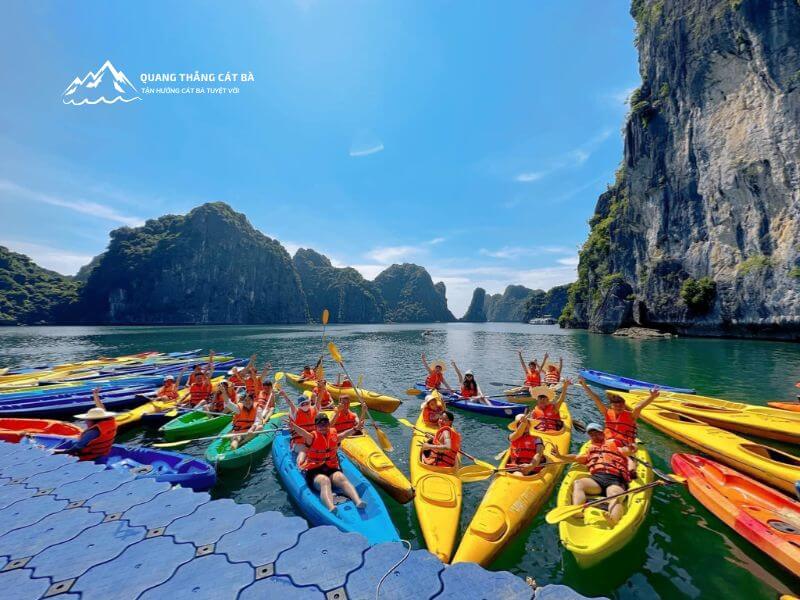
Activities on Cat Ba Island don’t need to be rushed or overpacked to feel rewarding. The real value lies in choosing a balanced, experience-first rhythm one moment out on the water, one in the forest, and one simply slowing down by the coast. Instead of chasing every stop, Cat Ba reveals itself best through a few well-chosen experiences that blend scenery, movement, and rest. If planned right, even a short trip can feel complete without ever feeling hurried.
What activities should you prioritize if you only have 1–2 days in Cat Ba?
Choose one core experience first (not everything at once) The most effective way to plan Activities on Cat Ba Island in a short stay is to anchor your trip around one main block, because combining a full bay trip, trekking, beaches, and sunset plans in one day quickly becomes exhausting and fragmented.
Prioritize a full Lan Ha Bay day (best use of time) If you have 24 - 48 hours, allocate 6–9 hours (or a full 08:00–17:00 day) to a Lan Ha Bay trip with kayaking and swimming, as this is the most immersive and time-demanding experience boats, water movement, and activity transitions naturally fill the day.
Add only a light island activity as a complement After a bay day, keep land activities simple: 1–3 relaxed hours at Cat Co Beach or a short Cannon Fort stop works better than stacking multiple stops, giving your body time to recover from a long water-based schedule.
For 48 hours: split water and land into separate days A balanced structure is Day 1 for bay (60–70%) and Day 2 for island (30–40%), typically pairing a moderate activity like Ngu Lam Peak (3.5–4 hours total) with a beach or viewpoint, leaving space for slow meals or sunset pauses.
For 24 hours: commit to one headline experience only Either go all-in on a Lan Ha Bay day trip (70–80% of time) or choose a short island program (3.5–4 hours) plus beach/town recovery, rather than trying to “fit everything in.”
Use energy-aware pacing to avoid burnout Even if it feels relaxed, a full bay day is physically long and layered (cruise, kayak, swim, lunch), so evenings are best kept soft dinner, short walks, or sunset drinks instead of another major activity.
Which activities deliver the highest “value per time” in Cat Ba?
Choose a Lan Ha Bay tour (best overall value) For most travelers exploring Activities on Cat Ba Island, a Lan Ha Bay half- or full-day tour (~32–50 USD) delivers the highest value per time because it bundles transport, scenery, kayaking, swimming, and multiple stops into one smooth experience. You move continuously through limestone karst landscapes while alternating between cruising, paddling, and short breaks, creating a steady rhythm of “new views → active moments → rest” without needing to plan logistics.
Pick a full-day tour if you want the widest experience range A full-day option stretches that experience across a full itinerary, often adding lunch and more varied stops, which makes the day feel layered rather than rushed. This is especially worth it for first-time or mid-range travelers, as it maximizes exposure to the UNESCO-recognized seascape in one decision.
Go for a half-day tour if time is tight A 3–4 hour half-day tour still captures core highlights cruising, kayaking, and short swims while fitting into a compact schedule. It works well if you want strong scenic payoff without committing your entire day.
Choose standalone kayaking for activity-focused value Kayaking (150,000–500,000 VND depending on duration/type) offers the lowest cost per activity hour and more control over pace. However, the experience is narrower you stay within a limited area and miss the broader landscape coverage that a boat-assisted tour provides.
Use beach time for lowest cost, lowest uniqueness Beaches like Cat Co 1, 2, and 3 are easy and budget-friendly, but they mainly offer relaxation rather than a defining Cat Ba experience. This option suits travelers prioritizing rest, but it delivers the least “once-I’m-here” impact.
Which activities fit your travel style (relaxation, exploration, family)?
The best Activities on Cat Ba Island depend on how much effort, time, and heat you’re comfortable with relaxing travelers benefit from light, low-transfer experiences, while adventure seekers and families need to choose carefully to avoid fatigue or underwhelming plans.
Relaxing couples (slow, low-effort travel) Choose a Lan Ha Bay day or sunset cruise with light kayaking/swimming, plus short beach time at Cat Co and a Cannon Fort visit by taxi. These options keep movement gentle short kayak sessions, nearby beaches, and easy transport reduce fatigue while still giving access to Cat Ba’s signature bay scenery.
Adventure seekers (active, high-energy travel) Prioritize Cat Ba National Park trekking (Ngu Lam route), longer kayaking, and climbing-focused tours. Expect uneven trails, humidity, and sustained effort these activities are built for travelers who want challenge and are comfortable with half-day to full-day exertion blocks.
Families with children (low-friction, flexible travel) Go for short Cat Co beach sessions, gentle bay cruises with optional brief kayaking, Trung Trang Cave, and Cannon Fort with vehicle access. Shorter activities reduce heat exposure and avoid long transfers or tiring terrain, making the day feel manageable rather than rushed.
What each group should avoid (to protect your experience)
Couples: Avoid stacking a full cruise + trekking + viewpoints in one day this compresses a short stay.
Adventurers: Avoid passive cruises or beach-only days if you want real activity.
Families: Avoid strenuous treks, climbing, or long uphill walks without transport these often lead to fatigue and frustration.
Timing tip (applies to all) Plan effort-heavy activities in the morning, when conditions are cooler and more manageable, and keep beach or cruise time in 2–4 hour blocks for better pacing.
What do most travelers overlook when choosing activities in Cat Ba?
Most travelers overlook how weather windows, peak-season transport congestion, and cumulative physical fatigue can quietly reshape short itineraries when planning Activities on Cat Ba Island, often turning a “packed” plan into a rushed or exhausting experience.
Watch the weather, not just the calendar: Kayaking and bay activities depend on calm seas and visibility, especially in April - October; a single rough half-day can cancel your core plan entirely, making short trips highly sensitive to sudden changes.
Factor in peak-season bottlenecks early: With over 20,000 daily visitors in peak periods, even reaching Cat Ba can mean ferry queues and delays, where heat, waiting time, and crowd density eat into your actual exploration window.
Don’t underestimate “light adventure” fatigue: A “simple” kayaking session can stretch 4–8 hours, and even a moderate trek like Ngu Lam Peak adds 2–4 more hours including transfers, creating a full-body, high-humidity day that carries into the next morning.
Avoid stacking too much into one day: Combining a paddle and a hike may look efficient on paper, but in reality between boat time, heat exposure, and recovery it often becomes a physically dense schedule rather than a relaxed experience.
Match activities to trip length: For a 1-day visit, it’s usually more realistic to commit to one major outdoor block well (bay or national park), instead of splitting energy across both.
This pattern matters most for travelers who prefer meaningful, well-paced experiences over rushing especially couples, families, or small groups aiming to enjoy rather than “complete” Cat Ba.
When should you NOT choose certain popular activities?
Skip Cat Ba National Park trekking in peak heat or humidity if you’re not used to physical exertion, because 30–35°C temperatures and humidity above 85% can quickly lead to dehydration and discomfort, especially on steep, rocky paths. The air feels heavy, and even short climbs can become exhausting without careful pacing and water breaks.
Avoid trekking after rain or during storm-prone days as trails can turn slippery with moss, fallen branches, and unclear sections, increasing fall risk. Underfoot, surfaces become unstable and require constant attention, which shifts the experience from enjoyable exploration to cautious navigation.
Reconsider trekking with young or inexperienced children, particularly in hot conditions, since the route includes many steps and physically demanding sections. Families may find the final stretch tiring, with heat and fatigue building rather than easing into a relaxed outing.
Skip Monkey Island if traveling with small children who may approach wildlife, as visitors are advised not to feed or provoke monkeys and to secure belongings. The unpredictability of monkeys especially around food can turn a casual visit into a stressful one rather than a carefree beach stop.
Avoid Monkey Island during the June–August monsoon season, when storms can disrupt boat access, making travel less predictable. Choppy conditions and schedule changes can interrupt what is meant to be a simple half-day experience.
Choose alternatives if your priority is relaxation, since trekking is physically demanding, and Monkey Island’s main beach often has arriving tour boats and roaming monkeys. For a calmer rhythm, quieter beaches or a Lan Ha Bay cruise tend to feel more restorative.
How to structure a 1 - 2 days Cat Ba itinerary for best experience?
Follow a simple rule: 1 main activity + 1 light add-on per day to avoid fatigue and rushed transitions this pacing works especially well for Activities on Cat Ba Island where transport, heat, and physical effort add up quickly.
1 day itinerary (short stay, keep it focused):
Day 1 (arrival → afternoon): Check-in, rest, then ease into Cat Co beach or a short town walk.
Late afternoon:Lan Ha Bay half-day sunset cruise (≈4–4.5 hours) fits neatly after arrival without overwhelming your schedule.
Next morning: Keep it light coffee, short walk, or beach then depart.
Alternative 24h option (if you prefer land over water):
Morning: Trekking in Cat Ba National Park (best done when energy is highest).
Afternoon: Slow beach time for recovery rather than adding another heavy activity.
2 days itinerary (balanced and smooth):
Day 1: Arrival, rest, then half-day Lan Ha Bay cruise you still get kayaking/swimming/sunset without using a full day.
Day 2 (choose one main focus):
Option A: Morning trek (≈2h to full-day depending on route) + relaxed beach afternoon.
Option B: Full-day Lan Ha Bay tour (≈7–8 hours) with evening free no second major activity needed.
Day 3 morning: No heavy plans leave buffer for transfer (≈1.5–2 hours via Hai Phong).
Pair activities strategically:
Lan Ha Bay = standalone main block (long duration + multiple components).
Trekking = morning + recovery later (heat + physical effort).
Beach = flexible buffer easy to adjust if plans shift or energy drops.
Should you explore Cat Ba independently or book a tour?
For most first-time visitors with 1–2 days, booking a tour is usually the better choice for Activities on Cat Ba Island, especially if Lan Ha Bay is on your list, because it saves time, simplifies logistics, and reduces the risk of missed connections or scheduling errors.
With a tour, your day often starts with hotel pickup around 07:30–08:00, followed by a smooth transfer to the pier and a structured 7.5–9 hour itinerary that flows without gaps. You move from town to boat to activity without needing to coordinate each step yourself, which feels noticeably more relaxed when time is tight and transport options can shift with demand or weather.
By contrast, going independently means managing ferry timing, island transfers, dock access, and return buffers on your own. This can feel flexible on paper, but in practice it adds friction especially when transport frequency and conditions vary, making even simple plans less predictable.
Cost-wise, independent travel can be cheaper (for example, low ferry fares), while tours typically range around 600,000 VND to ~35 USD for bundled experiences. However, the real trade-off isn’t just price it’s how much of your limited time is spent enjoying versus organizing.
For fit: tours tend to suit first-time, short-stay travelers who want a smooth highlight experience, while independent travel works better if your plan is slower, land-based, and flexible.
FAQs
Is 2 days 1 night enough for Activities on Cat Ba Island?
Yes, 2D1N is enough for Lan Ha Bay plus one island activity, but not to fully explore Cat Ba. It works best when you prioritize one main experience and avoid packing too many activities.
What should I prioritize in a short Cat Ba trip?
Focus on Lan Ha Bay as the core experience, then add one light activity like cycling or a short trek. Trying to fit multiple major activities often makes the trip feel rushed.
Why can 2D1N feel rushed on Cat Ba Island?
A large portion of time is spent on transfers (Hanoi–Cat Ba), leaving limited hours for exploration. This makes tight itineraries feel compressed if too many activities are included.
Is 3 days better than 2 days for Cat Ba?
Yes, 3D2N allows broader coverage and a slower pace, making it more suitable if you want beaches, trekking, and multiple experiences without rushing.
How much does a 2D1N Cat Ba trip cost?
Mid-range prices typically range from $116–$200 per person, depending on hotel or cruise options, often including meals, activities, and sometimes transfers.
Is a 2D1N tour good value compared to day trips?
Yes, while more expensive than day trips (~$27–$45), 2D1N packages bundle accommodation, meals, and activities, offering a more complete short experience.
Cat Ba is less about ticking off places and more about finding a pace that fits how you want to feel active, present, and unhurried. For travelers who value depth over volume, this mix of bay, forest, and coast often delivers the most satisfying version of the island. With Quang Thang Cat Ba, you can shape that balance more easily so your time here feels intentional, not improvised.
We are committed to continually striving to deliver the best service value to our customers and partners, in order to maintain the leading position of the Quang Thắng Cát Bà brand.
Quang Thang Cat Ba
[ 29B, 1/4 Street, Cat Ba Town, Cat Hai District, Hai Phong City. ] Hoàn Kiếm-Tp. Hà Nội