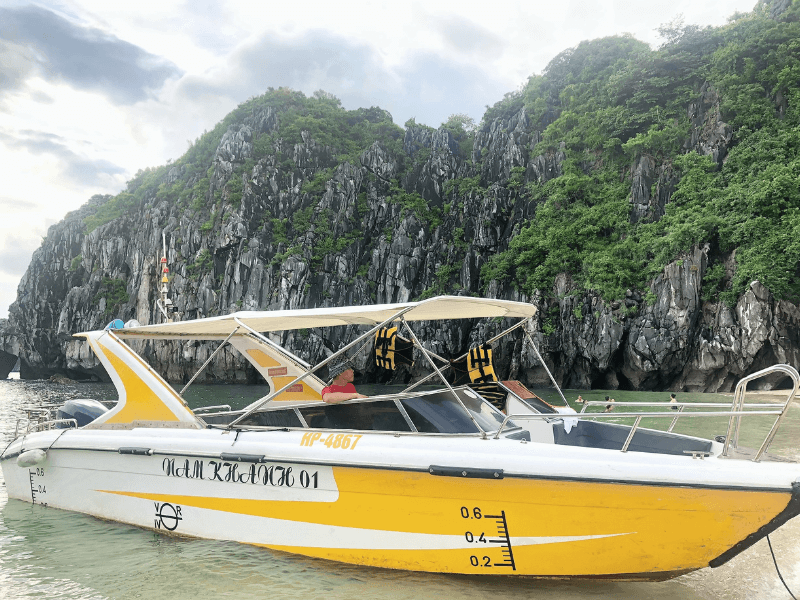
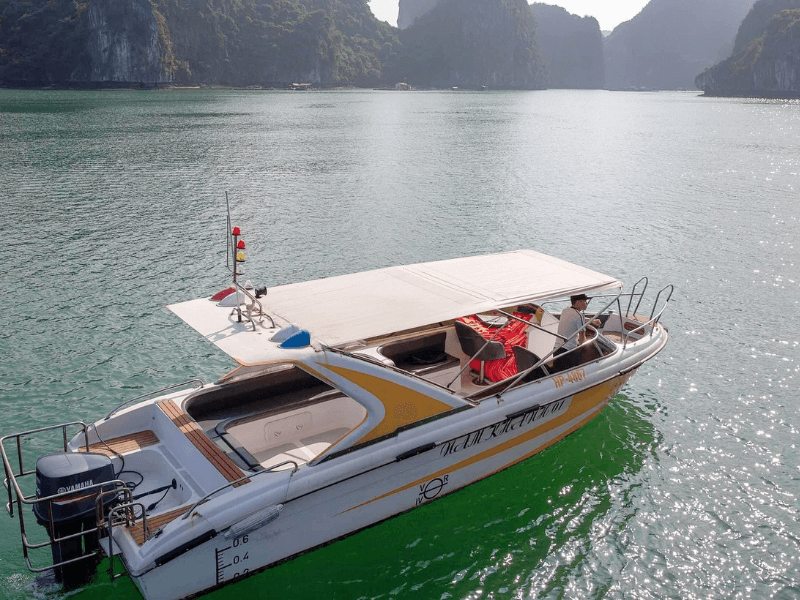
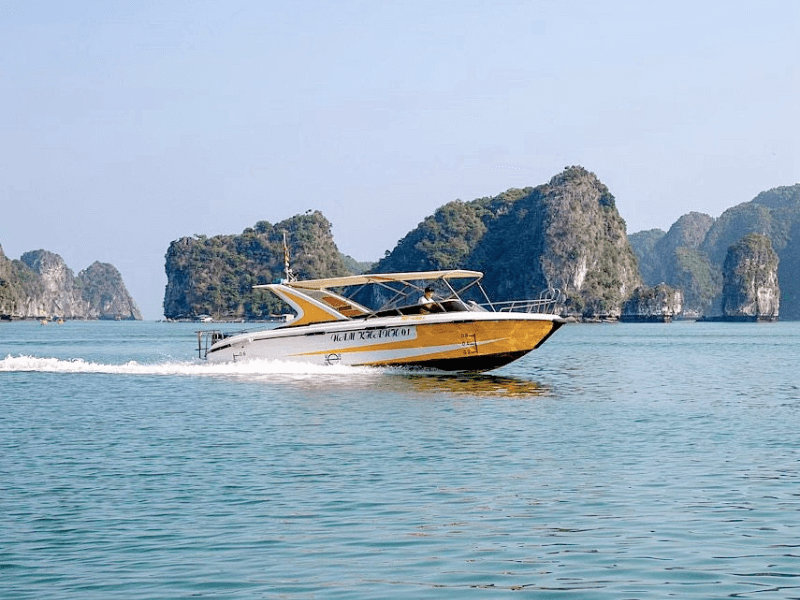
Tour Cano Cat Ba often sounds like the fastest way to “see it all,” but speed isn’t always the same as value. In a place like Lan Ha Bay where a full-day boat already unfolds across multiple stops, from floating villages to kayaking areas the real question becomes how you want to spend your time, not just how quickly you move. This guide focuses on price, itinerary clarity, and choosing the right rhythm for your trip, so you don’t pay extra for an experience that doesn’t actually fit.
What is a Cat Ba canoe tour and how is it different from boat cruises?
A Tour Cano Cat Ba (speedboat tour) is a fast-moving alternative to traditional cruises, designed to shorten transfer time and fit more stops into a tighter schedule, while boat cruises focus on slower, longer journeys (7.5–9 hours) with extended scenic sailing and relaxed pacing.
Aspect
Canoe (Speedboat Tour)
Traditional Boat Cruise
Time structure
Shorter, compressed itineraries; fast transfers between stops
Full-day (≈7.5–9 hours) with long sailing segments
Travel experience
Feels quicker and more active; movement between points is rapid
Feels calm, steady, and unhurried, with time to sit, watch, and drift
Route depth
Limited documented sightseeing routes inside the bay; often used as connectors
Clearly defined routes covering fishing villages, lagoons, caves, beaches
Onboard pacing
Tighter schedule; less idle time but can feel rushed
Includes dedicated blocks for kayaking (≈1–1.5h), swimming, meals, and sunset cruising
Comfort & conditions
Can feel physically rougher in wind or tides; less buffer time
More stable and spacious; better suited for relaxing and adapting to conditions
Best use case
Efficient transfers (e.g., mainland ↔ Cat Ba in ~10–15 minutes) or time-limited trips
Travelers who want the bay itself to be the main experience
The difference becomes clear once you’re on the water: a canoe tour moves quickly between points, reducing the long stretches of open-water cruising, while a traditional boat lets you linger—watching the landscape unfold slowly, with pauses that feel intentional rather than rushed.
For travelers deciding between the two, it often comes down to priority: save time and move fast, or slow down and experience the bay as part of the journey.
How much does a Cat Ba canoe tour cost and what actually drives the price?
Shared Tour Cano Cat Ba typically costs about $32 - $35 per person for a full-day trip, because it’s sold as a bundled package that already includes lunch, entrance fees, kayaking, guide, transport, and insurance making pricing simple and predictable.
Private canoe tours start around 5,000,000 VND (half-day/sunset) to 10,000,000 VND (full-day), but this base price mainly covers the boat itself, with extras like entry tickets (120,000 VND), kayaking (100,000 VND), and meals (~200,000 VND/person) often added separately.
Boat exclusivity is the biggest price driver shared tours spread costs across multiple travelers, while private tours charge you for reserving the entire boat, giving you quieter space and control over who you travel with.
Included services vs. add-ons change the “real price” significantly a low shared price already bundles essentials, while a private tour’s advertised rate can look similar at first but increases once you add kayaking, meals, and tickets.
Duration and itinerary scope also affect cost, with private half-day or sunset tours priced at about half of a full-day charter, while shared tours stay close in price because they follow fixed, standardized routes.
Flexibility and customization raise the value (and cost) private tours allow you to adjust timing, skip stops, or focus on activities like kayaking or swimming, whereas shared tours run on fixed schedules (e.g., ~7.5–9 hours).
Group size changes the equationfor solo travelers or couples, shared tours are usually better value, but for families or small groups, splitting a private boat can narrow the per-person gap and make exclusivity more worthwhile.
Who is a Cat Ba canoe tour best for and who should reconsider?
Best for small, active groups seeking flexibility:Tour Cano Cat Ba suits couples, families, or small friend groups who want to set their own pace stopping to swim, kayak, or linger at beaches rather than follow a fixed cruise schedule. The experience feels hands-on and fast-moving, with frequent transitions between activities.
Best for short-stay travelers maximizing time: If you’re working with limited days, speedboat tours often half-day to full-day with quick transfers help you cover more of Lan Ha Bay efficiently, moving quickly between kayaking spots, beaches, and floating villages without long idle cruising.
Best for travelers who value control over comfort: Private charters especially appeal to those who prefer shaping the day around weather, energy, and interests, rather than sitting through a preset itinerary. This flexibility is a core advantage, but it comes with a more active, less “hands-off” rhythm.
Less suitable for families with very young children or elderly travelers: Boarding conditions like steep or slippery pier steps and low-tide access can make the experience physically demanding, especially when carrying belongings or managing mobility needs.
Less suitable for motion-sensitive travelers: The small, fast-boat movement and changing sea conditions can feel unstable compared to larger cruises, making it a cautious choice if you’re prone to seasickness.
Less suitable for relaxation-focused trips: If your ideal day involves quiet lounging, minimal movement, and a slow pace, this tour style may feel rushed and activity-heavy rather than restorative.
Practical rule of thumb: Choose this tour if your group is small, mobile, and aligned on an active, flexible day reconsider if you prioritize ease, accessibility, or a calm cruise-style experience.
What itinerary should you expect from a Cat Ba canoe tour?
A typical Tour Cano Cat Ba itinerary follows a clear Lan Ha Bay loop: departure from Cat Ba town or Ben Beo Pier, a pass through Cai Beo floating village, kayaking in lagoon or cave areas, then a swimming stop at Ba Trai Dao before returning—this is the most consistent and experience-focused route.
Start at Ben Beo Pier / Cat Ba town You board a canoe or speedboat and quickly leave the busy harbor, transitioning into open bay scenery with steady movement rather than long waiting times.
Pass Cai Beo floating village A short, scenic glide through Cai Beo offers a glimpse of floating homes and daily life, usually as a visual stop rather than a long activity segment.
Cruise deeper into Lan Ha Bay The route opens into quieter limestone areas, where the pace slows and the surroundings feel less crowded—this is where the bay experience becomes more immersive.
Kayak through caves or lagoons (e.g., Dark & Bright Cave area) This is often the highlight activity, with calm water and enclosed spaces that reward slower exploration rather than rushing between stops.
Swim at Ba Trai Dao or nearby beaches The final main stop is a dedicated swimming break, typically relaxed and scenic, giving you time in the water rather than just a quick dip.
Return to Cat Ba The ride back usually retraces part of the route, closing the day without adding extra stops that would shorten water time.
A second, longer variation adds Viet Hai Village (by bike or electric cart), shifting the day toward culture and inland exploration—but this usually means less uninterrupted kayaking and swimming time, so it’s worth choosing based on your priority.
Shared vs private canoe tour: which one should you choose?
For a Tour Cano Cat Ba, choose shared tours if you want a simple, fixed, all-in day at ~32–35 USD per person, and choose private hire if your group values control over timing, stops, and onboard space especially from 3–6+ people where costs can be shared.
Group size
Shared tour (fixed package)
Private canoe/boat (charter style)
Best fit
1–2 people
~32–35 USD/person, includes lunch, kayaking, guide, tickets
Charter cost split across few people + possible extras
Shared wins (cost + simplicity)
3–5 people
Still affordable, easy booking, fixed schedule
Cost becomes more reasonable; flexible route & timing
Depends on priorities
6+ people
Total cost rises per person, no flexibility
Cost per person drops; full control of pace & stops
Private stronger
Large groups
Easy logistics but standardized experience
Designed for groups; customizable itinerary
Private ideal
In practice, shared tours feel structured: you follow a set route, move with the group, and stop where the itinerary dictates smooth, predictable, and low-effort. You’ll notice the pace is fixed, with coordinated kayaking, swimming, and lunch already arranged.
Private tours shift that rhythm. The day moves at your group’s speed you can stay longer at a beach, adjust swimming stops, or change timing entirely, creating a quieter onboard atmosphere and fewer compromises between travelers.
Quick decision rule:
Choose shared if you want cost certainty + zero planning
Choose private if your group can use flexibility to shape a better day, not just a pricier one
When should you NOT choose a Cat Ba canoe tour?
Avoid booking a Tour Cano Cat Ba when weather warnings appear (strong wind, heavy rain, rough sea), as these conditions often lead to itinerary changes, cancellations, or a noticeably rougher ride that reduces overall enjoyment.
Skip it during storm or typhoon season (July–October), especially when waves exceed 1.5 meters or winds reach level 6, because crossings may be delayed or canceled, turning a fast trip into an uncertain one.
Reconsider if high tide is expected, since it can block access to caves and limit kayaking routes, meaning key highlights of the experience may quietly disappear from your day.
Think twice if you’re prone to seasickness, as a speedboat in rough water often means a bumpy, wet ride with constant motion rather than a smooth scenic cruise.
Avoid if you expect the full advertised itinerary, because operators may replace kayaking or swimming with alternatives like village visits or land-based activities when sea conditions shift.
Not ideal for families with young children or travelers seeking a calm outing, as the fast, exposed ride can feel intense rather than relaxing especially in marginal weather.
Skip during peak summer or holiday periods if you value comfort, since overloaded transport and crowded departures can make the “fast” option feel rushed and stressful instead of efficient.
Choose an alternative if you have tight connections or fixed plans, because delays, cancellations, or last-minute changes are more common in unstable conditions, reducing reliability.
In these situations, a slower ferry or a land-based Cat Ba itinerary often provides more stability, comfort, and predictability than a speed-focused canoe tour.
How to choose the right Cat Ba canoe tour (without wasting money)?
Confirm the exact route and timing before booking your Tour Cano Cat Ba so you know precisely where the boat departs, how long each stop lasts, and whether it truly stays in Lan Ha Bay or also enters other areas. This helps you avoid tours that sound full-day but feel rushed or mostly anchored.
Check the real pickup plan, not just “hotel pickup” wording, including the exact address, time window, and fallback meeting point if access is restricted. Many travelers report last-minute changes that shift from door pickup to harbor meet-ups, which can disrupt your schedule.
Verify the named departure pier and return location in writing, such as whether you start from Ben Beo Pier or another port, because different starting points can change your total travel time and overall experience.
Ask for a clear inclusion list line by line entrance fees, kayaking, swimming, drinks, transfers, and return logistics so you don’t end up paying extra onsite for things you assumed were included. This is one of the most common cost traps in Cat Ba tours.
Clarify all extra costs and seasonal changes upfront, including possible substitutions (like kayaking replaced due to weather) or added fees such as transport or cable car tickets, which have caused real traveler complaints.
Double-check itinerary realism and activity flow, especially for longer tours (7–12 hours), to ensure stops are varied and not repetitive (e.g., similar kayak/swim sessions repeated). This helps match the experience to your expectations.
Keep all confirmations in one written message (chat or email) covering route, pickup, inclusions, exclusions, and cancellation policy this gives you clarity and protection if plans change or disputes arise.
FAQs
1. Does a Tour Cano Cat Ba run in bad weather?
Most tours still operate in light to moderate rain, but the operator decides unless authorities restrict travel. Conditions can change quickly, so don’t assume a “rainy day” means cancellation.
2. Who can cancel the tour for safety reasons?
The operator has primary decision authority, but official marine or government warnings override it. If authorities prohibit travel, tours may be canceled even if weather seems fine at departure.
3. Will I get a refund if the tour is canceled?
If canceled due to unsafe conditions, you may receive a refund, reschedule, or alternative route, depending on operator policy. If you cancel by choice (e.g., rain), refunds are not always guaranteed.
4. Is a “full-day” canoe tour always the full duration?
Not always. Even if listed as 8 hours or full-day, actual time may be shortened due to weather, port schedules, or safety rules, which can affect pacing and stops.
In the end, a speedboat tour fits better if your priority is covering distance and compressing time, especially on a short stay. But if your ideal day leans toward steady cruising, time in the water, and a more relaxed pace, a standard boat tour often delivers clearer value. With Quang Thang Cat Ba (https://quangthangcatba.com/), you can compare options transparently and choose what truly matches your travel style so your day in the bay feels right, not rushed.
We are committed to continually striving to deliver the best service value to our customers and partners, in order to maintain the leading position of the Quang Thắng Cát Bà brand.
Quang Thang Cat Ba
[ 29B, 1/4 Street, Cat Ba Town, Cat Hai District, Hai Phong City. ] Hoàn Kiếm-Tp. Hà Nội