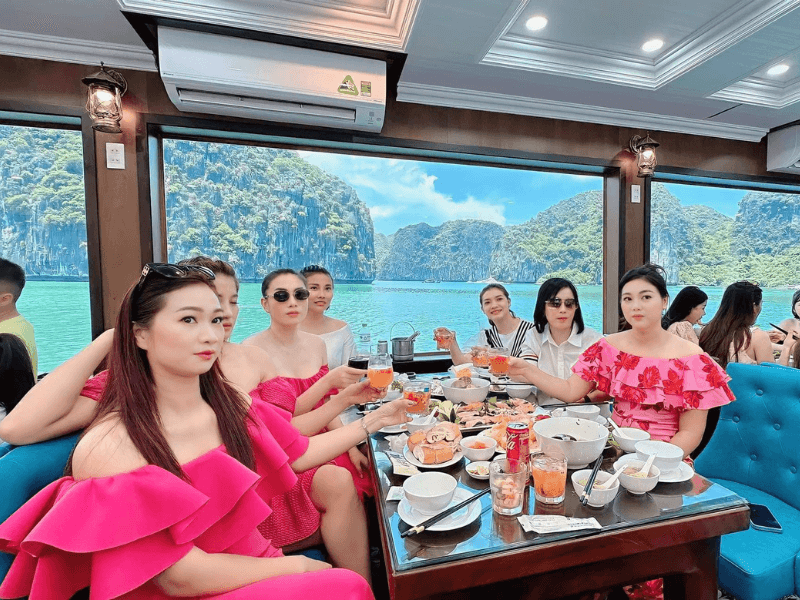
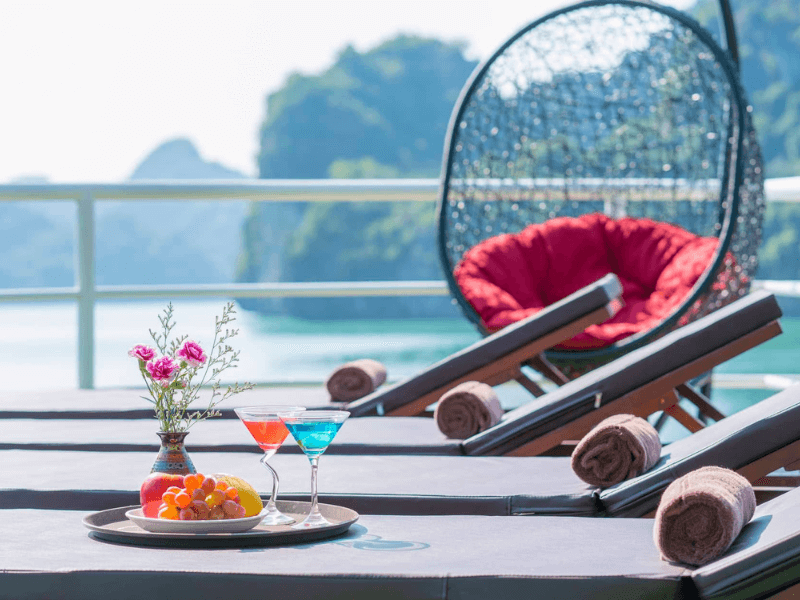
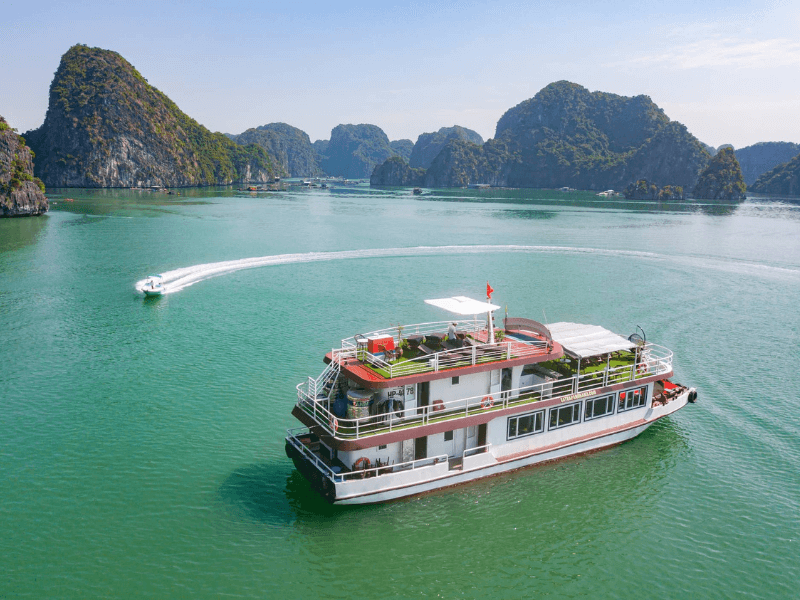
Lan Ha Bay Cruises aren’t just about price or star ratings - they’re about finding the right rhythm for your trip. Some mornings unfold quietly, with long stretches of kayaking between limestone arches; others feel more like a floating resort, with structured stops and lively evenings. In a bay that’s naturally calmer and less crowded than its neighbor, the experience shifts depending on how you travel. Choosing well isn’t about spending more - it’s about aligning your expectations with what the journey actually offers.
Is a Lan Ha Bay cruise actually worth it vs Ha Long Bay?
A Lan Ha Bay cruise is worth it if you prioritize fewer crowds, clearer water, and a quieter, nature-focused experience, while Ha Long Bay suits travelers who want iconic sights, easier logistics, and more lively onboard options - so the “better” choice depends on your travel style, not just the destination.
Aspect
Ha Long Bay (Core Routes)
Lan Ha Bay
Boat density
~200 - 500 boats/day peak, busy anchor points
~80 - 100 boats/day, more space between stops
Annual visitors
~4 - 4.5 million
~1.2 million
Water clarity
~1 - 2m visibility near main routes
~3 - 5m on clear days, ~70% fewer pollutants (2024)
Routes & flow
Fixed “greatest hits” (caves, viewpoints) with shared timing
Similar core set (kayak, swim, cooking), plus famous caves
Longer kayaking, village visits, calmer inlets
In practice, Lan Ha often feels quieter - fewer engines around you, more time drifting in open water, and anchor spots where only a handful of boats gather - while Ha Long can feel more crowded, especially at shared cave stops where multiple cruises converge.
However, the gap isn’t always dramatic: in low season, early departures, or budget itineraries using shared waters, the experience can feel surprisingly similar, making Ha Long a practical choice if your goal is simply to see the famous landscape efficiently.
For most travelers, it comes down to fit: Lan Ha Bay Cruises are better for slow, scenic exploration and quieter swimming, while Ha Long works well if you value iconic sights, easier access, and a more social cruise atmosphere.
Should you choose a day cruise, 2D1N, or 3D2N to avoid an incomplete experience?
To avoid an incomplete Lan Ha Bay Cruises experience, choose based on your real “on-bay hours” and downtime: 1-day gives ~5.5–7.5 hours on water (high activity, minimal rest), 2D1N offers ~24 - 28 hours with 2 - 4 hours of free time, while 3D2N stretches to ~48 - 52 hours with 2 - 3 hours daily downtime and a slower rhythm.
A 1-day cruise feels compressed: kayaking, swimming, and lunch are packed into short 60 - 90 minute blocks, with only 30 - 60 minutes of true downtime, often just sitting on the sundeck while returning. From Hanoi, the 4 - 6 hours of road transfer can rival your time on the bay, making the day feel long yet incomplete.
With 2D1N, the pace opens slightly—you move from afternoon activities into sunset, dinner, and a short sunrise window the next day. You’ll get ~6 - 7 hours of guided activities and ~2 - 4 hours of real downtime, but it still runs on a structured schedule, with fixed meals and quick transitions between stops.
3D2N slows everything down. The extra middle day adds ~12 - 15 hours of total activities and 4 - 5 hours of fully unscheduled time, where you can sit, rest, or simply stay in your cabin without missing the core experience.
Option
On-bay time
Activity load
True downtime
Overall feel
1-day
~5.5 - 7.5h
High density
30 - 60 min
Rushed, “just a taste”
2D1N
~24 - 28h total
Moderate
2 - 4h
Balanced but structured
3D2N
~48 - 52h total
Extended
4 - 5h
Slow, spacious rhythm
If your goal is to avoid feeling rushed, 2D1N is often enough; if you want time to actually pause between moments, 3D2N fits better.
What do most reviews get wrong about Lan Ha Bay cruises?
They trust visuals over reality: Many Lan Ha Bay Cruises are sold through polished images of spacious balcony cabins and empty sundecks, but reviews consistently describe smaller, worn rooms and crowded shared areas, especially on budget and mid-range boats.
They assume “5-star” means verified luxury: Most star ratings are self-assigned, not independently certified, so a “5-star cruise” can feel closer to mid-range - think busy dining rooms, average food, and uneven service despite premium labels.
They overlook crowding in a “quiet bay”: Marketing highlights Lan Ha as less touristy, yet reviews describe heavy boat traffic and packed stops at caves and lagoons, where multiple cruises converge at the same time.
They misread the itinerary timing: A “2 days 1 night” cruise often delivers around one full day on the water once transfers, waiting, and early returns are factored in - leaving the experience feeling compressed.
They expect full experiences, not short slots: Activities like kayaking or swimming are often limited to 30 - 40 minutes, with quick transitions that reduce time to actually enjoy the bay or the boat itself.
They rely only on high ratings: Overall scores stay high due to scenery and friendly staff, but critical details - crowding, logistics issues, upselling - usually appear in 3 - 4 star reviews, which many travelers skip.
They ignore logistics and boat specifics: Choosing based on photos instead of confirmed ship name, size (often 40–45 guests), and condition increases the risk of ending up on a different or lower-quality vessel.
Which type of Lan Ha Bay cruise fits your travel style?
Couples (quiet, romantic focus) → Choose smaller ships or adult-leaning cruises with high balcony ratios and fewer 3 - 4 berth cabins, because these layouts naturally reduce noise and crowding. Expect calmer spaces like lounges and restaurants instead of splash zones - this fits travelers who value privacy, scenic time, and slower evenings rather than high-energy activities.
Families with kids (activity-driven trips) → Look for larger ships with high family cabin density (quad rooms, connecting cabins) and built-in facilities like kids’ clubs, casual dining, and open public spaces. These ships are structured for movement - multiple venues and all-day food reduce friction when traveling with children and align with short, flexible itineraries.
Friend groups & social travelers (fun + nightlife) → Go for high-capacity ships with many bars, lounges, and shared activities, where interior or quad cabins keep costs manageable. The experience centers on group energy - late-night venues, social spaces, and daytime activities - making it easier to stay entertained together without overplanning.
Slow travelers & “unplug” seekers (calm, immersive trips) → Choose small ships or low-passenger cruises where fewer venues mean quieter spaces and easier navigation. Expect structured dining, talks, and port-focused itineraries - this setup suits travelers who prefer longer stops, fewer crowds, and a steady onboard rhythm.
Key insight for all travelers → The best-fit Lan Ha Bay cruises depend on how ship size, cabin layout, activity mix, and itinerary pattern align with your expectations - because even a high-priced cruise can feel crowded or dull if these core factors don’t match your travel style.
Are higher-priced cruises actually worth it?
Higher-priced Lan Ha Bay Cruises are worth it when you actively use what you’re paying for - smaller guest numbers, larger cabins (33–45 m²), better service, and quieter spaces - but they can feel unnecessary if your focus is mainly sightseeing and short stays.
Onboard, the difference is immediately spatial: fewer than 40 guests instead of 60, wider sundecks, and cabins with floor-to-ceiling glass or private balconies instead of compact rooms. Meals shift from simple shared menus to multi-course dining, and service becomes more attentive due to higher staff-to-guest ratios - but these upgrades matter most if you actually spend time enjoying them rather than being out kayaking or visiting caves.
The trade-off becomes clearer in real use. Core experiences - kayaking, swimming, scenery - are largely similar across price levels, and on 2D1N trips, schedules often feel packed, leaving pools, spas, or gyms underused. In contrast, longer 3D2N cruises give you the slower rhythm needed to enjoy quiet corners, better food, and onboard facilities, making higher pricing feel more justified.
For fit: premium cruises suit travelers who value privacy, sleep quality, and time onboard - like couples or those treating it as a highlight stay. Mid-range options tend to fit better if your goal is to see Lan Ha Bay efficiently with solid comfort, without paying for features you may barely touch.
When should you NOT choose a Lan Ha Bay overnight cruise?
Skip overnight Lan Ha Bay Cruises if your schedule is tight - fixed 6–9 hour or 2D1N/3D2N itineraries leave little buffer, and delays from weather or port congestion can disrupt onward flights or trains.
Avoid if you need strict timing certainty, especially during July–October typhoon season or when waves exceed ~1.5 m; departures can be delayed, rescheduled, or cancelled with no guarantee for your exact date.
Reconsider if you’re sensitive to motion or feel uneasy on boats; even in generally calm waters, some travelers report nausea at the pier or in open sections, and the feeling of being “stuck onboard” can be stressful.
Not ideal if you prefer flexible, independent travel; most cruises run with 20 - 40 guests, shared meals, and fixed slots for kayaking, swimming, and cave visits - opting out or changing pace is limited.
A poor fit for mobility or accessibility constraints; many boats are not wheelchair accessible and require stepping between levels, boarding kayaks, or climbing at caves and villages.
Skip if you dislike packaged or upsell-heavy experiences; some trips include subtle pressure for paid drinks or add-ons, which can feel less transparent than land-based planning.
Manage expectations if you’re sensitive to crowds or repetition; multiple boats often depart together, creating busy ports and shared activity zones, and some find kayaking routes similar to views already seen from deck.
Think twice in cooler, overcast seasons; late winter–early spring conditions can make scenery feel muted and water activities less enjoyable.
If these points sound familiar, a Cat Ba land base with short, flexible day trips or independent kayaking often provides more control, quieter moments, and better adaptability to weather or energy levels.
How to choose the right Lan Ha Bay cruise (without regret)
Turn reviews into a short, verifiable checklist before booking. Start by translating what you read into clear filters you can actually check - like ship style, itinerary depth, cabin location, and total cost - so you’re comparing facts, not impressions.
Match the cruise style to your travel “mood.” Filter for experience type (family, luxury, adults-only, expedition) and align it with how you want to spend your time - quiet spa days vs active, social spaces - so the onboard atmosphere feels right from day one.
Check itinerary depth, not just destination names. Look closely at number of stops, hours in port (e.g., 6 vs 9), and sequence of locations, because longer, well-paced stops create a slower, more immersive rhythm instead of rushed transitions between sights.
Verify cabin details using deck plans - not photos. Choose cabin type, size, and exact position (mid-ship, away from noise zones) to avoid disruptions like vibration or late-night activity above or below your room.
Measure crowding and onboard space. Compare passenger capacity vs ship size and restaurant availability per guest to understand whether your experience will feel relaxed or crowded, especially during peak times.
Calculate the real total price before committing. Add mandatory fees, gratuities, Wi-Fi, drinks, and excursions to the base fare so your budget reflects the full experience - not just the headline price.
Confirm timing, availability, and fit. Use filters for duration, departure date, and remaining cabin inventory to avoid last-minute compromises that lock you into poor cabins or mismatched itineraries.
In the end, the value of a cruise here lies in how closely it matches your travel style - whether you lean toward quiet nature or a more social, activity-filled pace. Lan Ha tends to reward those who want space, movement, and time outdoors, especially on short trips. With Quang Thang Cat Ba (https://quangthangcatba.com/), you can explore options that fit your rhythm more precisely - so the experience feels intentional, not just booked.
We are committed to continually striving to deliver the best service value to our customers and partners, in order to maintain the leading position of the Quang Thắng Cát Bà brand.
Quang Thang Cat Ba
[ 29B, 1/4 Street, Cat Ba Town, Cat Hai District, Hai Phong City. ] Hoàn Kiếm-Tp. Hà Nội