


Do You Need a Ferry to Get to Cat Ba? The answer isn’t just yes or no it’s about how you want your journey to feel. From waiting in a busy queue to gliding across the bay or timing a smooth transfer, each option shapes your time, rhythm, and comfort differently. Understanding these trade-offs helps you move with intention, not guesswork. So before you go, it’s worth asking: which route truly fits your trip?
Do You Need a Ferry to Get to Cat Ba?
No, you don’t need to take a traditional ferry yourself to reach Cat Ba. Today, travelers can choose between two direct no-ferry crossings (cable car or speedboat) or a third, more convenient option: a bundled bus transfer that arranges the crossing for you.
|
Route type |
Ferry avoided? |
Core journey |
Typical crossing time |
Typical price |
Main convenience tradeoff |
|
Cable car (Cat Hai–Phu Long) |
Yes |
Road → cable car → road to Cat Ba Town |
~15 minutes (cable car) |
~70,000 VND |
Cheapest and scenic, but limited hours, lunch break, closed Tuesdays, not direct to town |
|
Speedboat (Dong Bai–Cai Vieng) |
Yes |
Road → speedboat → bus/taxi to town |
~10–15 minutes (boat) |
~120,000–180,000 VND |
Fastest crossing, but still requires 30–40 min road transfer after landing |
|
Through-ticket bus combo |
Usually (handled by operator) |
Hanoi pickup → expressway → crossing → Cat Ba Town |
~3.5 hours total |
~280,000 VND |
Most convenient, but less flexible and routing depends on operator |
Key takeaway: You don’t need a ferry, but you do need a crossing. Choose the cable car for budget, the speedboat for speed, or a through-ticket transfer for the simplest, hassle-free journey from Hanoi.
When you must take a ferry (and when you don’t)
You must take a ferry to Cát Bà if you’re bringing a car or motorbike across open water with no bridge or tunnel. You don’t need one if you travel as a foot passenger via alternative routes or use a fixed link where available.
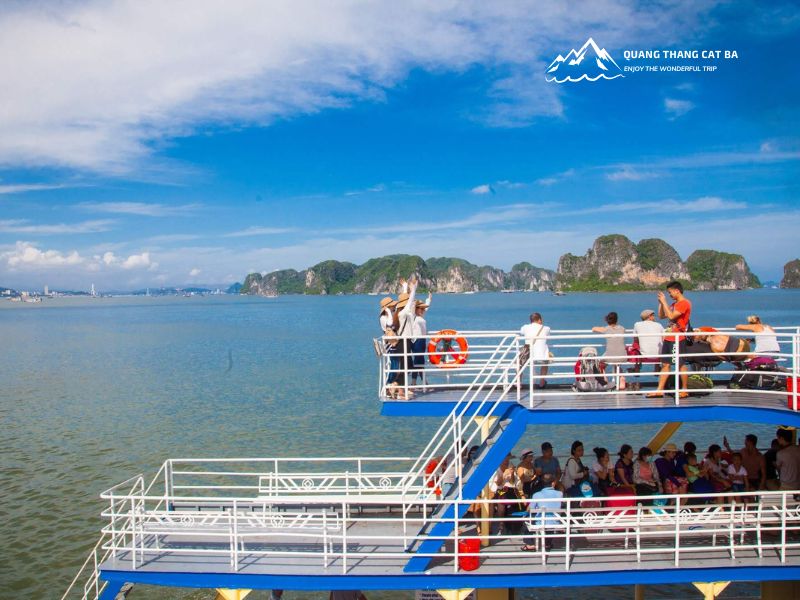
- Ferry is unavoidable when:
- You’re transporting a car or motorbike across water with no bridge or tunnel
- You want to keep your vehicle with you on arrival
- The route functions as part of the road network via ferry crossing
- Ferry can be avoided when:
- You travel without a vehicle and can switch to a foot-passenger route
- An alternative like a bridge, tunnel, or shuttle exists (not applicable directly to Cát Bà, but relevant in route planning)
- You prioritize speed or flexibility and choose multi-leg transport (bus + boat, etc.)
- Mode matters most:
- Cars & motorbikes: ferry is typically mandatory
- Foot passengers: more flexible route choice determines necessity
Key takeaway: For Cát Bà, ferries are essential for vehicles but optional for foot travelers who can choose faster, more flexible passenger routes.
Comparing 3 Ways to Reach Cat Ba: Ferry vs Cable Car vs Speedboat
You don’t need a ferry to reach Cát Bà, cable cars and speedboats are viable alternatives. Cable cars offer the most predictable timing, speedboats are usually the fastest crossing, and ferries provide the most relaxed experience, making the best choice depend on whether you prioritize reliability, speed, or comfort.
|
Mode |
Travel Time |
Reliability |
Experience |
|
Cable Car |
~15–20 minutes typical; avoids road congestion |
Highest reliability; continuous flow, minimal waiting |
Smooth, quiet, scenic; can involve short queues |
|
Speedboat |
Fastest: ~8–30 minutes depending on route |
Variable; affected by weather, boarding delays |
Quick but often bumpy, loud, and cramped |
|
Ferry |
Slowest: ~25–60 minutes + possible queueing |
Moderate; follows schedules but impacted by peak congestion |
Spacious, relaxed, scenic; can feel slow or crowded |
Cable cars gain a timing advantage by running on fixed aerial routes with frequent departures; in a comparable system, travel time dropped by nearly 80% versus road transport. Speedboats excel in pure crossing time but are more exposed to sea conditions. Ferries trade speed for space and a calmer, more scenic journey.
Key takeaway: Choose the cable car for consistent timing, the speedboat for urgency, and the ferry for a more relaxed, scenic ride.
Which Route Should You Choose to Avoid Waiting?
If your priority is avoiding queues on weekends or peak season, choose the cable car first, speedboat second, and ferry last. The cable car offers the most predictable timing, while ferries face the highest congestion risk, especially during holidays and peak travel hours.
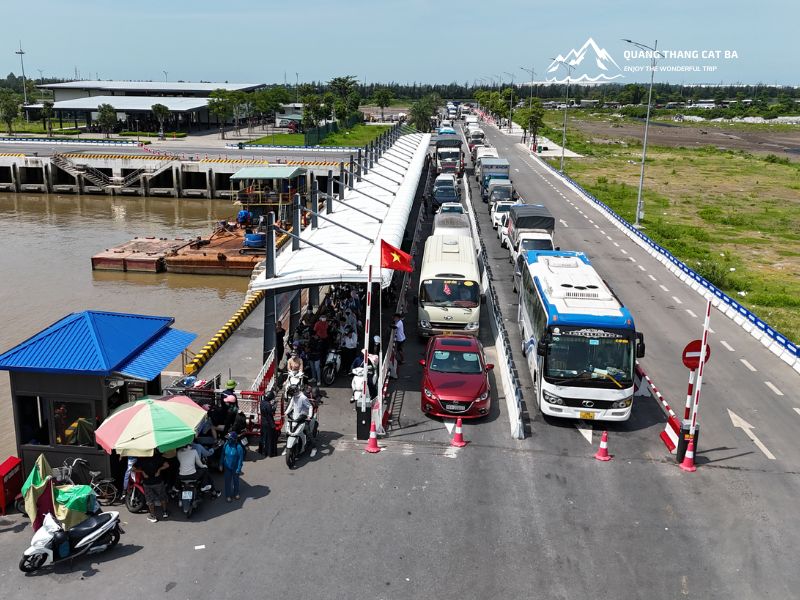
- Cable car (Best for avoiding waits)
Short ~10-minute crossing with more controlled passenger flow. Official tourism sources position it as the fastest, most reliable option for bypassing ferry congestion, though booking ahead is still recommended on busy days. - Speedboat (Good alternative)
Faster than ferries and less affected by vehicle queues. However, limited departures and possible sell-outs mean you should book in advance and avoid weekend peak slots (around 8:00–9:00 and 14:00–16:00). - Ferry (Highest waiting risk)
למרות frequent departures, demand can spike 3–4 times during holidays, and a 2025 operational guide advises arriving 45–60 minutes early to secure a spot. Peak congestion typically hits Friday–Sunday and midday windows.
Key takeaway: For the most time-efficient trip, prioritize the cable car. If that’s not feasible, pre-book a speedboat. Use the ferry mainly when transporting vehicles or prioritizing cost over time certainty.
Best Option If You Don’t Want to Handle Transportation Yourself
If you don’t want to manage bookings or transfers, a Cat Ba combo package is the easiest option, saving planning effort and reducing coordination mistakes rather than dramatically speeding up travel. It’s best for travelers who value convenience, a single contact point, and smoother same-day adjustments.
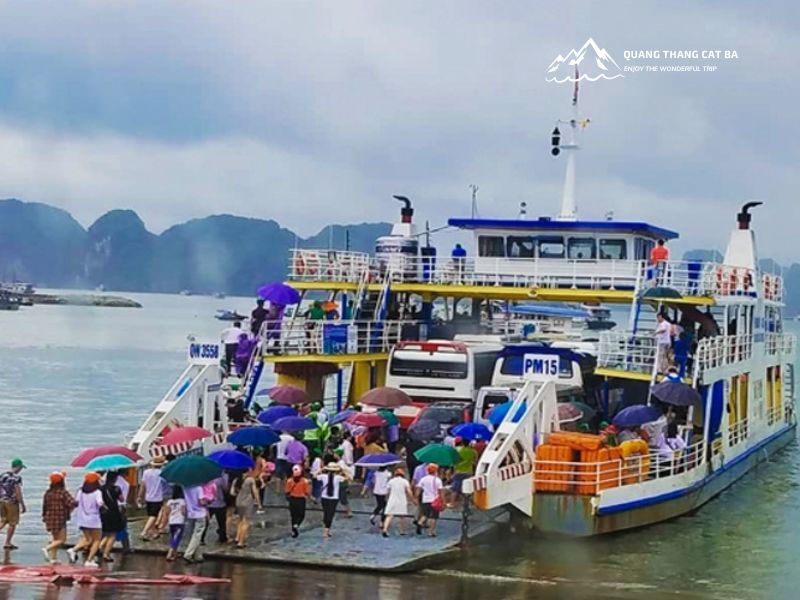
- Smoother transfers, less planning stress
Packages handle pickup, ferry/speedboat crossings, and hotel drop-offs in one flow, so you avoid booking each leg separately and confirming multiple schedules. - Time saved is mostly coordination, not travel speed
Expect to save around 1 - 3 hours of planning and same-day logistics, not necessarily faster physical transport. You may still change vehicles and carry luggage. - Lower risk of missed connections
Operators manage timing between bus, boat, and tours, reducing common issues like wrong pickup points or misaligned departure times. - Flexible handling of changes
Good providers adjust plans for weather, medical issues, or schedule conflicts, helping you avoid last-minute disruption stress. - Stronger on-island support
Many packages include local coordination (cruises, tours, hotel timing), so you arrive with a workable plan instead of organizing everything on arrival. - But risks don’t disappear
One provider handling everything means a single delay or miscommunication can affect multiple legs; external issues (weather, outages) still apply.
Key takeaway: Combo packages are best for convenience and risk reduction, not speed. If you value simplicity and one point of contact, they’re a strong choice; if you prefer full control, independent booking may suit you better.
FAQ (Frequently Asked Questions)
Do you need a ferry to get to Cat Ba?
No. You can avoid ferries by choosing a through-transfer that uses a speedboat or cable car for the sea crossing instead of a traditional ferry.
What is the fastest way to reach Cat Ba from Hanoi?
The fastest practical route is a through-booked transfer: bus from Hanoi, 8–10 minute speedboat or cable car crossing, then a 35–40 minute bus to Cat Ba Town (about 3h15 total).
Is a through-transfer better for first-time visitors?
Yes. It combines hotel pickup, coordinated connections, and drop-off in Cat Ba Town, so you don’t need to manage multiple tickets or transfers yourself.
How do I make sure I avoid the ferry?
When booking, choose the version labeled “cable car” or “speedboat.” Avoid limousine options that explicitly include a ferry crossing.
Is the cable car faster than the ferry?
Yes. The cable car crossing takes about 9 minutes, compared to over 20 minutes by ferry, making it a quicker and smoother option.
Getting to Cat Ba is less about the crossing itself and more about how you manage waiting time, transfers, and timing. Ferries suit those who value flexibility, while cable cars and speedboats often protect your schedule in busy periods. With Quang Thang Cat Ba, planning becomes simpler so you can focus on choosing the route that fits your pace and travel style.

