


Experience the Dong Bai – Cai Vieng Ferry can feel surprisingly smooth or unexpectedly slow depending on how you plan it. This short crossing isn’t defined by time on the water, but by how you navigate waiting versus flow, especially when queues build during peak periods. On quieter days, arrivals sync easily with frequent departures, creating a calm, almost routine transition to Cát Bà. But the real difference lies in timing and knowing when to choose differently.
The Real Problem: Ferry Time vs Waiting Time
When you plan to Experience the Dong Bai – Cai Vieng Ferry, the real uncertainty isn’t the crossing it’s the wait. While the ferry ride itself takes only about 15–30 minutes, actual travel time can stretch significantly depending on queues, timing, and whether you bring a vehicle.
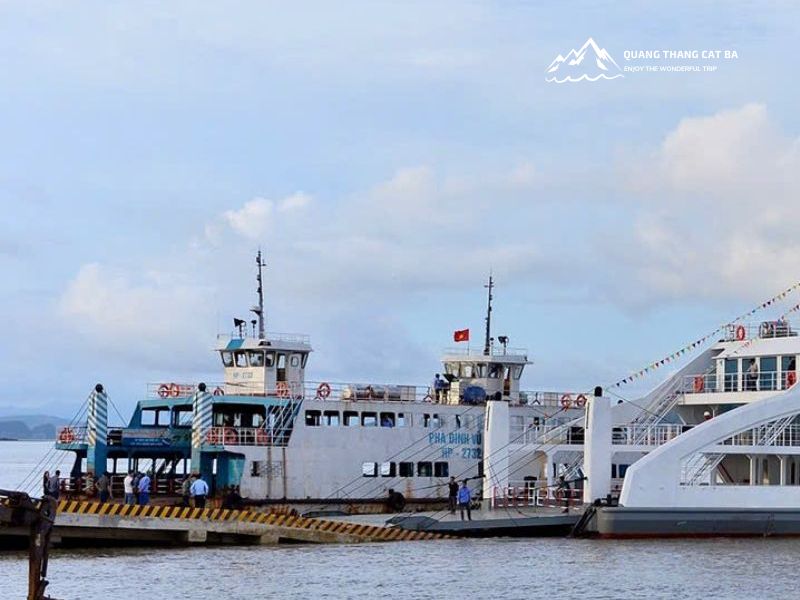
The key issue is mismatch: ferries run every 30–60 minutes, but demand doesn’t arrive evenly. On a normal weekday, arriving just before departure often means minimal waiting, keeping the total ferry stage within 30–60 minutes. However, if you arrive just after boarding closes, you may add another full interval to your wait.
During weekends and holidays, this gap widens. Vehicle queues especially cars can exceed ferry capacity, turning a simple transfer into a 1–2 hour wait or longer. In contrast, walk-on passengers and motorbikes move much faster, often avoiding the worst delays.
Think of the ferry not as a fixed 15-minute crossing, but as a variable time block shaped by demand, timing, and transport choice.
Key takeaway: The ferry ride is short, but waiting time defines your experience arrive strategically and avoid bringing a car to keep your journey smooth.
Best Time Slots to Avoid Long Queues
To experience the Dong Bai – Cai Vieng Ferry with minimal waiting, aim for the first sailing of the day (around 5:30 - 7:00 AM). On weekends, this early window is even more critical, as queues build quickly and can lead to waits of up to 2 - 2.5 hours once peak traffic sets in.
|
Day Type |
Best Slot |
Acceptable Backup |
Highest-Risk Slots |
|
Weekday |
5:30 - 7:00 AM |
2:00 - 4:00 PM |
Late morning - early afternoon (peak season) |
|
Weekend |
5:30 - 6:30 AM (first ferry) |
3:00 - 5:00 PM |
7:30 AM - 1:00 PM, especially summer/holidays |
Because ferries run every ~30 minutes and crossings take 20 - 30 minutes, delays are mainly caused by vehicle queues, not limited departures. Early mornings feel calm and efficient, while midday periods often bring dense lines of cars and motorbikes.
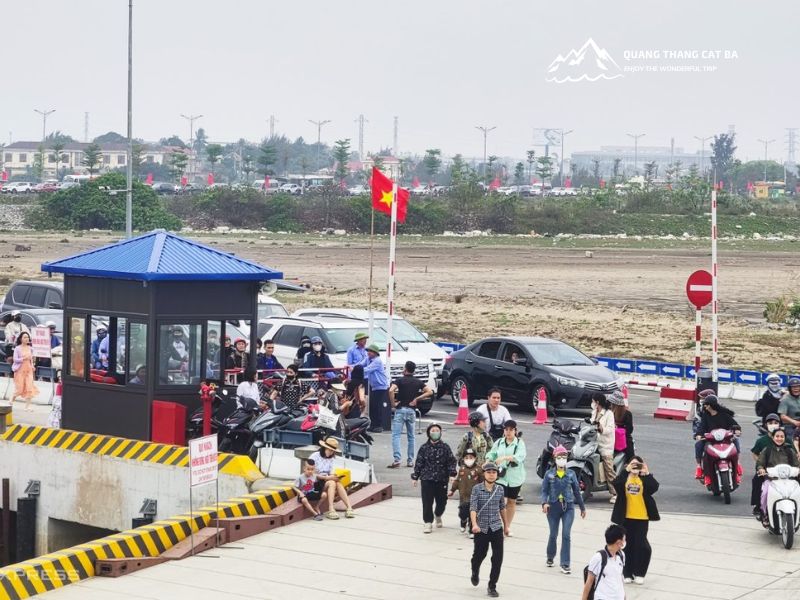
Key takeaway: Prioritize the first ferry of the day for the smoothest experience especially on weekends. If you miss it, shift to mid-afternoon rather than risking long midday queues.
Who Should Take the Ferry – And Who Should Avoid It
The Dong Bai – Cai Vieng ferry suits travelers needing vehicle access to Cát Bà on normal days, but becomes far less practical during peak periods when queues can stretch for hours. Choosing it depends less on the crossing itself and more on your timing, flexibility, and comfort expectations.
|
Traveler group |
Suitability |
Why |
|
Motorbike riders |
Good (except peak times) |
Low-cost, direct transport with easy onward riding on Cát Bà; delays mainly come from congestion, not boarding difficulty. |
|
Families with cars |
Moderate → Poor on busy days |
Convenient for carrying kids and luggage, but long queues and heat make waiting uncomfortable; holiday delays can exceed several hours. |
|
Leisure tourists (no vehicle) |
Moderate |
Budget-friendly and simple, but less suitable for those needing predictable timing or a relaxed start to the trip. |
Key takeaway: The ferry works best for motorbike travelers or off-peak trips. If you’re traveling during holidays or value time certainty and comfort, alternative transfers can save hours of waiting.
Alternatives to Skip the Ferry (Premium & Hassle-Free Options)
If you want to experience the Dong Bai – Cai Vieng Ferry without waiting, speedboats and combo tickets are the two main upgrades. Speedboats cut crossing time significantly, while bus + boat combos focus on smoother door-to-door travel with fewer transfer hassles.
|
Option |
Time Saved (vs Ferry) |
Typical Cost |
Best For |
Trade-offs |
|
Speedboat (short crossing) |
~20–30 minutes (Dong Bai–Cai Vieng short hop) |
~80,000 VND |
Travelers prioritizing speed and queue avoidance |
Less stable in choppy water, higher cost |
|
Speedboat (Tuan Chau route) |
~30–40 minutes |
Higher than 80,000 VND ferry fare |
Fastest water crossing option |
Bumpier ride, limited space |
|
Direct Hai Phong speedboat |
Minimal total journey time savings |
~250,000–270,000 VND |
Fewer transfers, more direct routing |
Expensive, not much faster overall |
|
Bus + Boat Combo (Hanoi/Ninh Binh) |
Small time savings |
~38,000 VND (public) to ~$13 (tourist combo) |
Hassle-free transfers, hotel drop-off |
Longer total journey than speedboat |
|
Standard Ferry (baseline) |
~30–40 minutes |
~10,000–14,000 VND |
Budget travelers, stable ride |
Long waits in peak season (1–2+ hours possible) |
Speedboats deliver the largest real time advantage, especially during peak congestion when ferry queues stretch beyond scheduled times. Meanwhile, combo tickets prioritize predictability and convenience, making them ideal if you value a smooth, organized journey over raw speed.
Key takeaway: Choose speedboats to save the most time and skip queues, but expect a higher price and bumpier ride. Choose combo tickets if you want a stress-free, well-connected journey with minimal transfer effort.
Pre-Departure Checklist to Avoid Delays
To experience the Dong Bai – Cai Vieng Ferry without long waits, focus on timing and arrival strategy rather than ticket tricks. The most reliable way to reduce delays is avoiding peak demand periods and positioning yourself for earlier sailings before queues build.
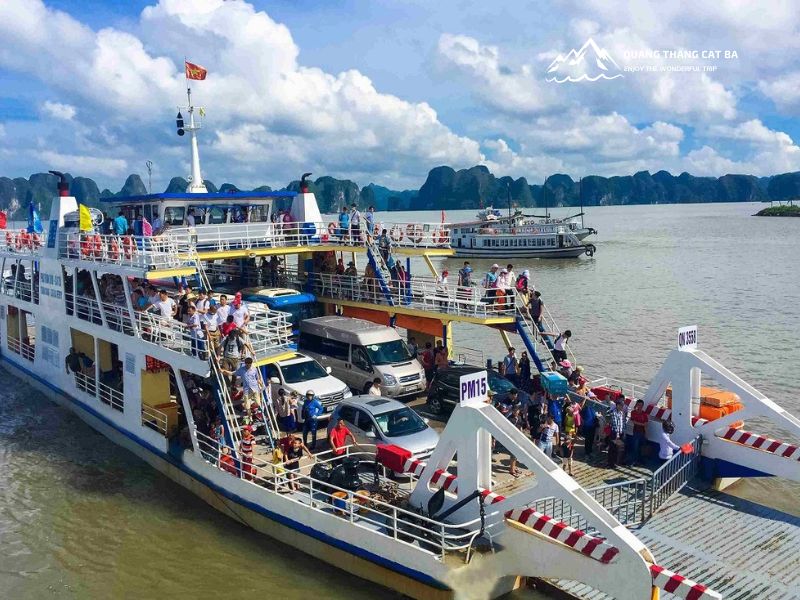
- Avoid weekends, public holidays, and peak summer dates
These periods consistently create the longest queues and highest risk of sold-out departures. - Arrive early at the terminal
Getting there before major crowds form increases your chance of boarding an earlier ferry, especially on busy days. - Choose off-peak departure windows
Skip the busiest times (around 09:00–11:00 and 15:00–17:00) and aim for early morning or quieter midday slots. - Consider the speedboat alternative
If minimizing wait time is critical, speedboats can bypass ferry queues entirely, though at a higher cost. - Don’t rely on online booking to skip queues
Booking options are inconsistent and do not guarantee faster boarding for vehicles.
Key takeaway: Timing and arrival matter far more than booking method. Plan around demand peaks, arrive early, and stay flexible to significantly reduce your waiting time.
FAQ
Do ferries run at fixed intervals?
Not exactly. Schedules change by weekday, weekend, and demand, and weather can still disrupt posted times.
Is the crossing time the full journey time?
No. Waiting can account for 30%–74% of total travel time, according to ferry reliability studies, so the onboard portion is only part of the trip.
Does the ferry drop me at my final destination?
No. You’ll still need to travel from Cai Vieng terminal to your hotel or beach—usually by taxi or motorbike.
How long are weekend waits?
They can stretch to hours during peak periods, especially late mornings and afternoons, and are often unpredictable.
What matters most for a smooth trip?
Timing. Early morning or late evening departures reduce queue time and make the experience more predictable.
The ferry works best for travelers who value flexibility and cost efficiency, especially on ordinary weekdays when queues stay manageable. If your trip leans toward tight schedules, family comfort, or peak-season travel, it’s worth choosing alternatives that reduce uncertainty. With Quang Thang Cat Ba, you can shape a smoother journey that fits your pace so your time goes into the experience, not the wait.

