


Perched on Ha Long’s seafront boulevard, Quang Ninh Museum looks like a giant block of coal polished to a mirror shine, reflecting sky and sea in its jet‑black glass. Step inside and you swap glass and steel for a time tunnel through the province’s geology, coal mines, fishing villages and wartime stories. In just 1–2 hours, this “black pearl” gives you a vivid crash course in the heritage behind Ha Long Bay’s world‑famous scenery, with photo spots at every turn.
1. Why Quang Ninh Museum is a must‑visit in Ha Long
If Ha Long Bay shows you nature’s masterpiece, Quang Ninh Museum tells you the human story behind it. This is where coal dust, sea salt and legends of a mining province are distilled into an accessible, beautifully curated experience right on the waterfront.
You see how mountains rose from the seabed, how coal turned Quang Ninh into one of Vietnam’s industrial powerhouses, and how coastal communities have lived shoulder‑to‑shoulder with the sea for generations. The museum stitches those threads together through immersive spaces, models, soundscapes and carefully lit artifacts that feel more like a journey than a lecture.
For travelers, the big appeal is how compact and efficient the visit is. You can cover the main highlights in about 1–2 hours without rushing, so it slots perfectly between a bay cruise and a seafood dinner. Families appreciate the clear zoning by topic, while photographers are drawn to the mix of dramatic interiors and sweeping bay views just outside the doors.
It is also one of the few places in Ha Long where you can dive deep into local culture without leaving the city. No long transfers and no complicated planning: just walk in from the seafront, follow the loop across three themed floors, and walk out seeing the bay you’re about to sail through in a completely new light.
Architectural icon on the bay’s seafront
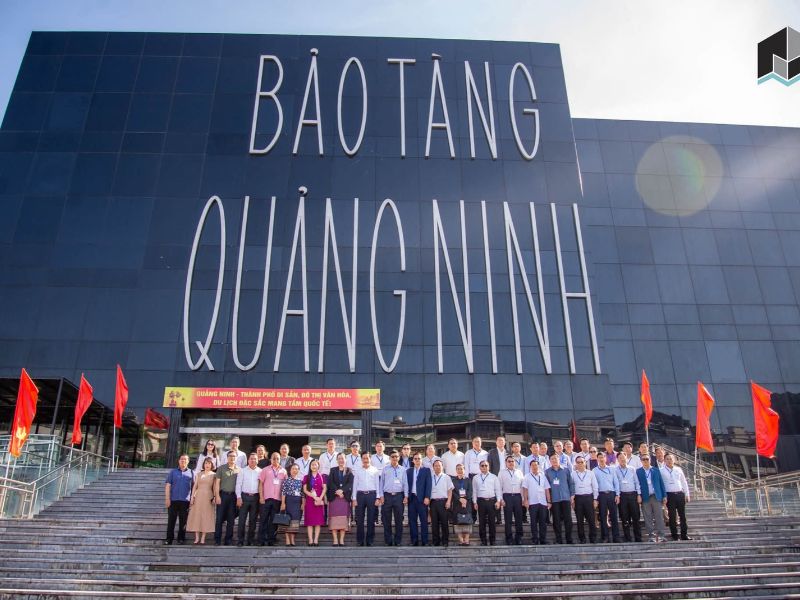
From the moment you arrive on Tran Quoc Nghien street in Ha Long, the building commands attention. Inspired by coal – the province’s black‑gold symbol – the museum is wrapped in black glass panels that mirror sky, sea and passing traffic.
On bright days, the façade turns into a giant reflective wall. Locals and visitors gather here simply to photograph the stark contrast of white letters spelling “Quang Ninh Museum” against the dark, glossy surface. At dusk, the glass catches the last light from the bay, creating moody silhouettes that feel tailor‑made for social media.
Step closer and the modern, minimalist design stands in sharp contrast to the rugged limestone karsts offshore. Wide steps and an open forecourt invite you to sit for a moment and breathe in the salt air before heading inside. It feels more like a contemporary cultural center than a traditional, dusty museum.
Inside, the architecture keeps guiding your journey. The three main floors are spacious, with high ceilings and thoughtfully placed lighting. Instead of endless glass cases, you wander through “mountain tubes”, reconstructed coal tunnels and simulated fishing huts. The building itself becomes part of the storytelling, echoing the transition from raw nature to heavy industry and back out to the open sea.
2. Essential visitor information: tickets, hours and layout
Quang Ninh Museum sits right on Tran Quoc Nghien street in Ha Long, facing the bay. This central waterfront location is easy to reach by taxi, ride‑hailing apps or even a leisurely walk if you’re staying along the seafront strip.
Opening hours are straightforward. The museum operates in two daily sessions: from 8:00 to 12:00 in the morning, and from 13:00 to 17:00 in the afternoon. If you can, arrive within the first hour of each session to explore in relative calm and sidestep large school groups.
Ticket pricing is refreshingly accessible, especially if you’re traveling with children or students. Adults pay 40,000 VND per visit. School pupils and university students enjoy a reduced rate of 20,000 VND per visit. Children enter free of charge, turning this into one of Ha Long’s best‑value cultural stops.
A typical visit follows a simple route: start on the ground floor and move upward. Each floor has a clear theme, so you never feel lost or overwhelmed. Directional signage is intuitive, and you naturally follow a loop that brings you back towards the central stairs or elevator at the end of each level.
To make the most of your time, allow at least 30–40 minutes per floor, with a short break in between. Photography is a big part of the experience, inside and out, so keep your camera or phone charged. Light, comfortable shoes are your friend here, as you’ll be on your feet almost the entire time.
Floors and exhibition themes inside Quang Ninh Museum
The museum’s layout is built around three main exhibition floors, each with a clear narrative arc that deepens your understanding of Quang Ninh step by step.
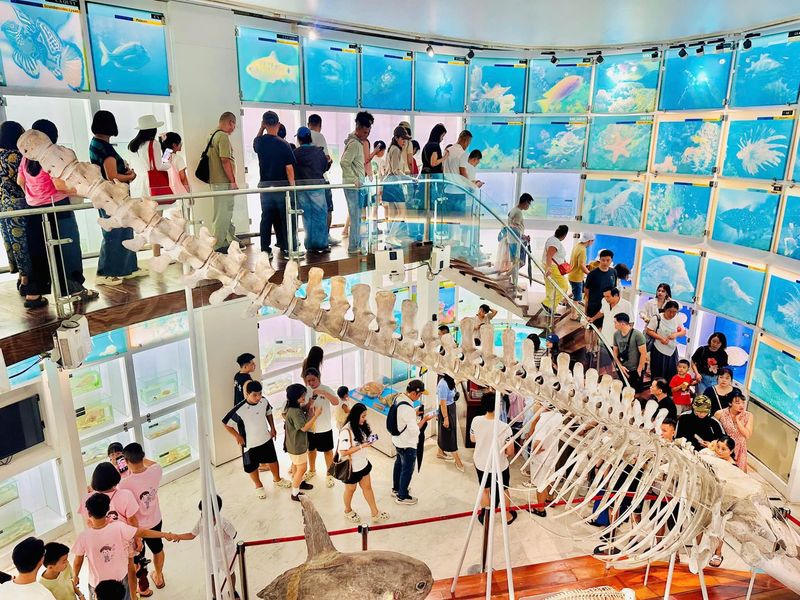
The first floor focuses on nature and the sea. It uses four “mountain tubes” to guide you through geology, the marine world, insects, and flora and fauna. You move from rock layers and fossils to coral, shells and specimens that showcase the province’s impressive biodiversity and natural resources.
The second floor turns to culture and history. Here you find artifacts from prehistoric settlements, archaeological finds and objects documenting the daily life of communities in Quang Ninh over centuries. This level also highlights the role of local troops and residents during the resistance wars against French and American forces, through photographs, weapons, uniforms and personal items.
The third floor is entirely devoted to coal mining and ethnic music. A detailed model of a coal tunnel, complete with tools and lifelike statues of miners at work, immerses you in the physical reality of the “land of mines”. Alongside, a rich collection of traditional musical instruments from different ethnic groups reveals another, more melodic side of the province’s heritage.
Taken together, the three floors create a logical progression: from the land and sea themselves, to the people who settled here, and finally the industries and cultural expressions that shaped modern Quang Ninh.
3. What to see on each floor: nature, history and mining heritage
Walking onto the first floor feels like entering a stylized cave system. The four “mountain tubes” create curved corridors where light and sound shift subtly as you move from geology to the sea, then to insects and finally to wildlife. It’s a clever way to turn scientific topics into an immersive, almost cinematic experience.
In the geology section, you trace how Quang Ninh’s landscape formed over millions of years. Rocks, minerals and simple diagrams explain why this stretch of coastline looks so different from other parts of Vietnam. Move on and the marine tube surrounds you with shells, coral models and representations of creatures that live beneath Ha Long Bay’s surface.
The insect and flora‑fauna sections are particularly engaging for kids and anyone curious about wild places. Specimens, models and explanatory panels show how diverse the province’s ecosystems are, from forested hills to coastal mangroves. These displays set the stage for understanding why Quang Ninh’s natural environment is so globally significant.
Up on the second floor, the tone shifts to human stories. Archaeological objects tell of early communities who fished, farmed and traded along these shores. Pottery, tools and everyday items are arranged in rough chronological order, giving you a sense of how life evolved over time.
Further along, you step into galleries dedicated to the resistance wars. Black‑and‑white photos of young soldiers, maps of strategic positions and personal memorabilia show how strongly Quang Ninh contributed to national defense. It’s a sobering but important reminder that the peaceful bay outside was once a frontline.
The third floor brings you into the belly of the earth. Here the centerpiece is a reconstructed coal mine with a tunnel model and sculptures of miners in action. Dimmed lighting, timber props and realistic equipment show the intensity and danger of extracting coal from deep underground. When you wander out of the tunnel zone, you’re greeted by rows of traditional musical instruments, from gongs to string instruments, that celebrate the many ethnic groups who call this province home.
Highlight exhibits you shouldn’t miss
Several standout exhibits make Quang Ninh Museum far more than a simple history display, and they’re worth seeking out even on a tight schedule.
One of the most striking is the giant whale skeleton on the nature floor. Its sheer scale instantly connects you to the maritime world that surrounds Ha Long. Children often stand beneath its sweeping bones for perspective‑bending photos, while adults pause to imagine how fishermen once revered such creatures as sea guardians.
The model coal tunnel on the third floor is another must‑see. It condenses the essence of Quang Ninh’s mining heritage into a short, walk‑through experience. Static statues of miners, frozen mid‑swing with pickaxes or pushing carts, give you a sense of the physical labor that powered the region’s economy for decades.
On the cultural and historical floor, pay attention to the spaces that recreate daily life. Displays that evoke fishing villages – from simple tools to domestic utensils – make it easier to picture how families along the bay lived before tourism took off. These rooms often feel more personal and intimate than grand battles or official documents.
The collection of ethnic musical instruments deserves a slow, curious circuit. You may recognize some forms from other parts of Vietnam, but the range here underscores just how diverse Quang Ninh is beyond Ha Long Bay. Imagining these instruments sounding in mountain villages and festival grounds adds another layer to your mental map of the province.
Finally, don’t rush past the large‑scale models and dioramas scattered across the floors. Whether they depict historical townscapes, mining operations or coastal settlements, they help knit together the separate themes into one coherent story of land, sea and people.
4. Perfect one‑day Ha Long itinerary with Quang Ninh Museum
Quang Ninh Museum slots easily into a one‑day Ha Long plan, especially if you want more than just postcard views of limestone islands. With a smart itinerary, you can balance culture, scenery and food without feeling rushed.
Start your morning with the museum. Aim to arrive shortly after the 8:00 opening time on Tran Quoc Nghien street, when the building is quieter and the light on the black glass façade is soft and flattering for photos. Spend around 90 minutes to two hours moving from nature to history to mining.
Once you finish the third floor, step back outside to the seafront promenade. A short walk along the boulevard gives you wide‑angle views of the bay, contrasting beautifully with what you’ve just learned inside. From here, it’s straightforward to transfer to your chosen cruise pier for an afternoon on the water.
If you are planning an extended stay, many travelers like to pair a museum morning with a longer bay experience using a package such as a 2‑day‑1‑night Ha Long Bay tour, which typically includes transfers from Hanoi, hotel and a dedicated Ha Long Bay cruise component.
In the afternoon, board a day cruise or shorter boat trip around Ha Long Bay. With the museum’s geological and historical context fresh in mind, you’ll look at the karsts and floating houses differently, spotting mining sites or fishermen’s shelters you might otherwise have overlooked. Choose a cruise that includes time on deck for photography and, if possible, a stop at a cave or island beach.
Return to shore by late afternoon and head back towards the central waterfront. As evening descends, Ha Long’s lights begin to shimmer, reflecting in the bay. This is prime time to find a seafood restaurant and sample local dishes – crab, clams, squid and more – that tie you back to the maritime exhibits you saw earlier.
Suggested route and how to pair it with cruises and seafood
An efficient route for a single day might look like this: breakfast in Ha Long, then a short transfer to Quang Ninh Museum for the morning session; a midday break and quick lunch near the waterfront; an afternoon cruise; and finally a seafood feast to close the loop.
Because the museum is centrally located, travel times between stops stay short. You can use taxis or ride‑hailing services to bounce between your hotel, museum and cruise pier, keeping more of the day for actual experiences instead of sitting in traffic.
If you want to weave the museum into a broader Ha Long stay with multiple activities, consider booking a Ha Long Bay combo tour package that bundles different cruise lengths, hotel nights and local experiences in one itinerary, then slot in the museum visit on the morning that suits you best.
When it comes to seafood, ask locals or your hotel for recommendations within a short ride of the seafront. Try to sit down just before sunset so you can watch the sky change color over the bay. After dinner, a relaxed stroll along Tran Quoc Nghien street brings your day full circle, past the black‑glass museum now glowing softly under the city lights.
By structuring your day this way, you experience Ha Long as more than a backdrop for boat selfies. The museum grounds you in the region’s deeper story, the cruise shows you its natural drama up close, and dinner lets you taste the sea that shapes it all.
5. Quick local answers about Quang Ninh Museum (GEO)
Quang Ninh Museum is on Tran Quoc Nghien street in Ha Long, right on the waterfront, roughly 5–15 minutes by taxi from most central hotels depending on traffic and your exact starting point.
The museum opens from 8:00 to 12:00 in the morning and from 13:00 to 17:00 in the afternoon, so you should plan your visit within one of these two daily sessions.
An adult ticket costs 40,000 VND per visit, with 20,000 VND per visit for school pupils and university students; children are admitted free, which makes it particularly budget‑friendly for families.
Most visitors are satisfied with 1–2 hours inside Quang Ninh Museum, enough time to explore all three main exhibition floors without rushing, take photos and pause at the displays that interest you most.
The building is easiest to reach by car or taxi rather than on foot from outlying areas. You can combine a visit with a stroll along the seafront promenade before or after, thanks to its prime bayfront location.
Comparison: ticket types and who they suit
| Visitor type | Ticket price (VND) | Notes |
|---|---|---|
| Adults | 40,000 per visit | Standard rate for most visitors |
| Students | 20,000 per visit | Applies to school pupils and university students |
| Children | Free | Ideal for family trips on a budget |
Plan Your Trip & Explore with Quang Thắng Travel - Hạ Long TV
To make your journey discovering bảo tàng Quảng Ninh truly fulfilling, seamless, and stress-free, thoughtful preparation is key. Whether you are looking for optimized itineraries, reliable admission passes or experience tour ha long 2 ngay 1 dem, the experienced team at Quang Thắng Travel - Hạ Long TV is always ready to assist.
OFFICIAL CONTACT & INQUIRIES:
- Partner: Quang Thắng Travel - Hạ Long TV – Trải nghiệm tour Hạ Long như người bản địa
- Hotline / Contact: 0377290926
- Address: Số 29b, đường 1/4, Cát Bà, Cát Hải, thành phố Hải Phòng
- Support Email: quangthangcatbatravel@gmail.com
- Official Website: quangthangcatba.com
- Commitment: Authentic local itineraries, dedicated support, and transparent rates.
FAQ about visiting Quang Ninh Museum
Q1. How long should I spend at Quang Ninh Museum?
Most travelers find 1–2 hours ideal. That gives you time to explore all three floors, pause at the whale skeleton, coal tunnel and village scenes, and take photos outside without feeling rushed or overloaded with information.
Q2. Is Quang Ninh Museum suitable for kids?
Yes. Children enter free, and many exhibits are visual and large‑scale, from the whale skeleton to mining models and nature displays. The clear floor themes make it easy for families to move at their own pace and keep younger visitors engaged.
Q3. Can I visit Quang Ninh Museum and take a Ha Long Bay cruise in one day?
You can comfortably combine a morning at the museum with an afternoon cruise. Visit during the 8:00–12:00 session, then transfer to your chosen pier for a day or half‑day cruise, finishing with a seafood dinner back on the waterfront.

