


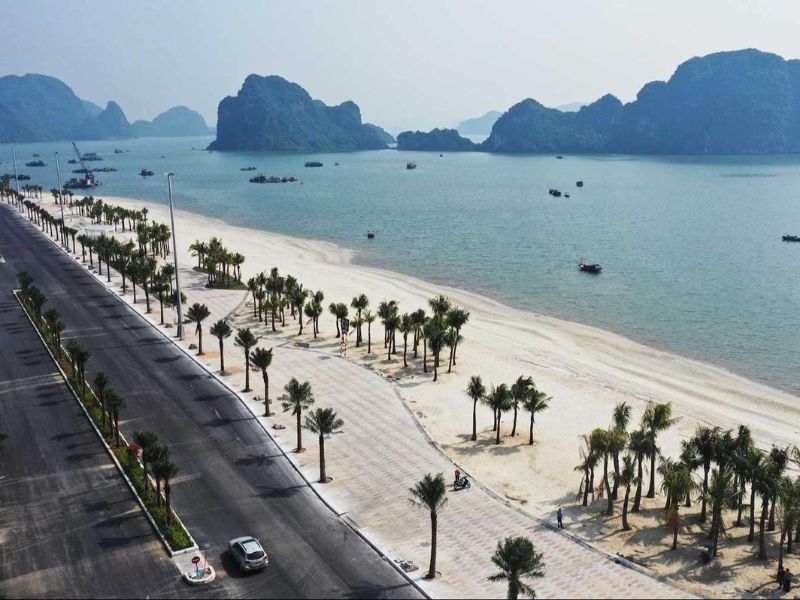
Hon Gai Beach is Ha Long's new central beach, stretching nearly 1 km with clear water, fine sand, and direct views of the bay. Less crowded than Bai Chay, this area is ideal for travelers who prefer a moderate, clean space that is convenient for dining and easily combined with inner-city sightseeing. This article compiles experiences in swimming and dining around Hon Gai, suggests itineraries, and offers ways to integrate them into flexible tour options so you can have a relaxing yet experiential beach day.
1. Overview of Hon Gai Beach: Location, Characteristics, and Best Time to Visit
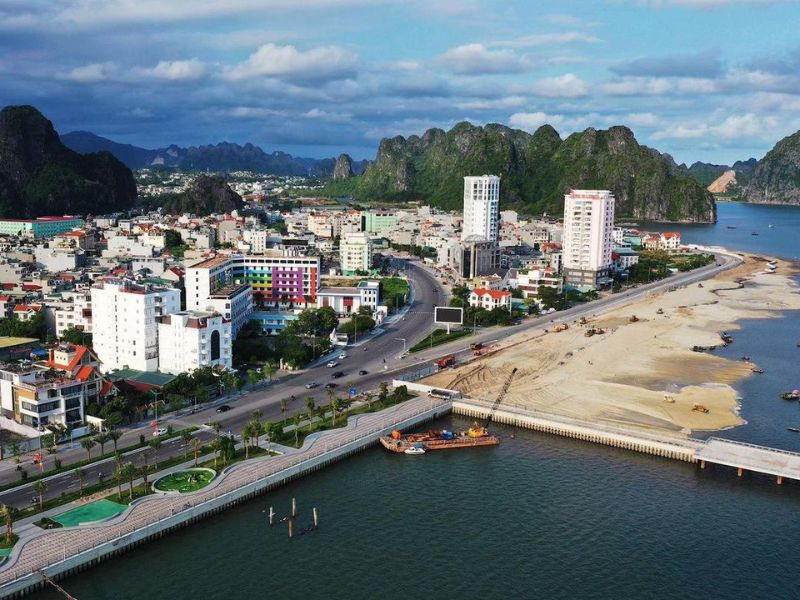
Hon Gai Beach is located along Tran Quoc Nghien Road, Hong Ha Ward, Ha Long City, stretching from the old Hon Gai Post Office area to near the Bai Chay Bridge. Inaugurated in 2021, the beach is about 900m long and over 150m wide, making it a rare stretch of coastline in the Hon Gai area, which was previously dominated by residential zones and commercial ports. Getting from central Bai Chay to Hon Gai takes about 10–15 minutes across the Bai Chay Bridge, offering great convenience for visitors staying on either side.
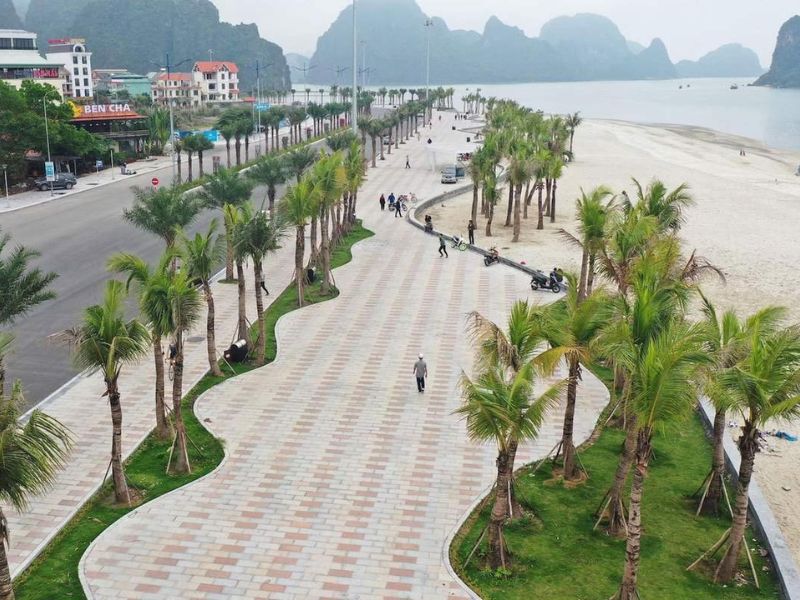
The biggest advantage of Hon Gai Beach is its relatively clear water, low litter, fine sandy shore, and gentle slope, making it suitable for families with young children. Newly planned, the area features wide sidewalks, plenty of greenery, resting benches, and clean access paths to the sea, complete with a lifeguard team on duty during peak hours. In the afternoon, visitors can look straight out from the beach toward Ha Long Bay, the Bai Chay Bridge, and the Sun Wheel, creating Ha Long's signature landscape.
The best time to swim in Hon Gai is from April through September when Northern Vietnam enters summer, featuring plenty of sunshine and minimal prolonged rain. During the day, it is recommended to swim in the morning from 6:00 AM to 8:30 AM or in the afternoon from 4:00 PM to 6:00 PM to enjoy cooler water and avoid harsh sunlight. Peak domestic tourism falls around the April 30 – May 1 holiday and June–July. For a more airy atmosphere, you can visit on weekdays or in late August and early September when the weather remains pleasant while tourist crowds decrease.
2. Should You Choose Hon Gai or Bai Chay When Visiting Ha Long?
2.1 Quick Comparison Between Hon Gai Beach and Bai Chay
When planning a beach trip in Ha Long, many people debate whether to choose Hon Gai or Bai Chay. Both areas belong to Ha Long City and are separated by just a bridge, yet their experiences differ distinctly. Bai Chay is a traditional tourism hub concentrated with hotels, resorts, and large entertainment complexes. Hon Gai serves as an administrative and residential center, having introduced public beaches only a few years ago, offering a clearer taste of local daily life.
The table below summarizes the basic differences between the two areas:
|
Criteria |
Hon Gai Beach |
Bai Chay |
|
Atmosphere |
Quieter, more locals, fewer service soliciting |
Vibrant, crowded with tourists |
|
Beach & Shore |
New public beach, clean, about 900m long |
Long artificial beach divided into multiple service zones |
|
Dining |
Near Ha Long Market, many reasonably priced seafood spots |
Numerous restaurants, western streets, generally higher prices |
If you prioritize swimming, local culinary experiences, visiting seafood markets, and balanced expenses, Hon Gai is a better fit. If you want to stay close to entertainment complexes like Sun World Ha Long Complex, walking streets, bars, pubs, and dense tourism services, Bai Chay will be more convenient. Many families choose a balanced solution: staying on the Bai Chay side while dedicating an entire day to cross over to Hon Gai for swimming, seafood, and visiting the museum and library.
2.2 Choosing an Area Based on Target Audience and Itinerary
For family groups with young children and elderly members, a reasonable itinerary prioritizes relaxation and minimizes transit. In this case, combining Hon Gai Beach with a visit to the Quang Ninh Museum – Library and Ha Long Market 2 within a few kilometers radius makes for an easy and pleasant choice. You can take short taxi rides, take breaks directly at hotels or seaside cafes along Tran Quoc Nghien Road, avoiding exhausting and costly entertainment spots.
For groups of young friends and couples who enjoy nightlife and adventure games, booking a room in Bai Chay is convenient due to its proximity to Sun World, the Queen Cable Car, and night streets. However, spending a morning swimming in Hon Gai is still well worth including in your plan, especially if you have joined programs like Ha Long Tour Combos and have free time before or after heading out onto the bay. Balancing both sides of the bridge provides a more complete Ha Long experience beyond just resort boundaries.
3. Swimming & Dining Experiences Around Hon Gai Beach
3.1 Swimming, Strolling, and Check-ins Along Tran Quoc Nghien Road
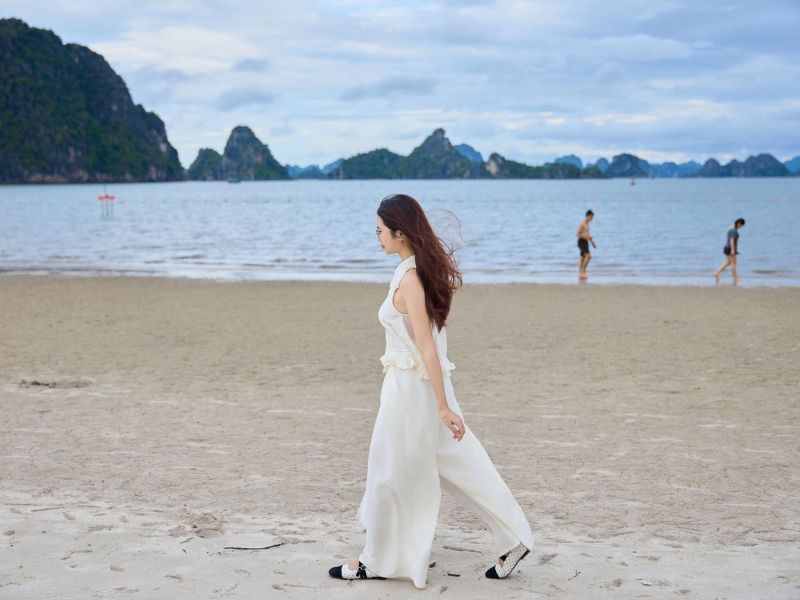
The primary activity at Hon Gai Beach is swimming. The beach features multiple step-terraced access paths, foot-washing water spouts, and simple public changing rooms. Visitors should bring towels, waterproof phone pouches, and small bags to keep valuables close, as professional lockers are not yet as developed as on larger beaches. Children should wear life jackets or arm floaties, adults should not swim beyond the boundary buoys, and everyone must heed announcements from the lifeguard team.
Besides swimming, the section of Tran Quoc Nghien Road alongside the beach is a scenic coastal route for walking, jogging, or cycling. From here, you can capture panoramic views of the Bai Chay Bridge, the Sun Wheel, and limestone mountains on the bay during sunrise or sunset. In the afternoon, many local families gather here to relax, children play in the sand, and adults sit on stone benches catching the breeze, evoking a much closer feel than pure tourist zones.
3.2 Seafood, Sea-View Cafes, and Local Eateries
Hon Gai’s advantage lies in its proximity to major seafood markets like Ha Long Market 1 and Ha Long Market 2. Here, you can buy fresh seafood and take it to surrounding eateries for preparation, or choose restaurants sourcing their ingredients directly from the market. Seafood prices in Hon Gai are generally softer than in Bai Chay, especially for groups ordering by weight. It is advisable to ask for the prices of items like tu hài (venus snails), bề bề (mantis shrimp), swimming crabs, and orange-spotted grouper beforehand to avoid misunderstandings.
Along Tran Quoc Nghien Road and neighboring streets, you will find various newly opened cafes, milk tea shops, and bakeries featuring balconies or glass windows overlooking the sea. After swimming, you can stop here to rest, charge phones, and enjoy the sea view. If you are looking for affordable local dishes, residential wards like Hong Ha and Hong Hai host numerous pho shops, seafood noodle spots, xôi chả mực (sticky rice with squid patties), and steamed rice rolls. Walking deeper into these neighborhoods usually leads you to spots serving locals, with minimal price hikes and authentic Quang Ninh flavors.
Note: Bring small-denomination cash for parking, drinking water, and snacks around the beach; many street vendors and small shops do not yet accept QR code payments or cards.
4. Suggested 1-Day Hon Gai Itinerary Combined with Sightseeing & Tours
4.1 1-Day Itinerary Departing from Bai Chay or Central Ha Long
A full day centered around Hon Gai Beach can start early in the morning. If staying in Bai Chay, setting off for Hon Gai around 6:30 AM is ideal for swimming while the sun is mild. Taxis or ride-hailing cars across the Bai Chay Bridge vary in cost by brand and exact distance, but are generally affordable for small groups. Finishing swimming and photography around 8:30 AM–9:00 AM, you can head to the Hong Ha area for breakfast featuring squid patty rice rolls or seafood noodles, then continue your itinerary.
From 9:30 AM to 11:00 AM, a logical stop is the Quang Ninh Museum – Library, located a few kilometers from the beach. The modern building exhibits the history of coal, sea, and Quang Ninh culture, requiring about 1 to 1.5 hours for exploration and photos. For lunch, enjoy seafood in Hon Gai or Ha Long Market, rest, and return to the beach or a seaside cafe around 2:00 PM. In the late afternoon, take a stroll across the Bai Chay Bridge, admire the bay from above, and head back to your accommodation, concluding a day blending sea views, culture, and cuisine.
If combining a bay tour, schedule Hon Gai swimming on your arrival or departure day. Reserve the remaining day for a boat or cruise excursion on the bay to avoid a rushed schedule. Spacing out experiences helps groups—especially families with children—stay energized while appreciating multiple facets of Ha Long.
4.2 Combining with a 1-Day or 2-Day 1-Night Ha Long Bay Tour
Many visitors to Ha Long now choose a "flexible tour" model: the fixed part consists of a 1-day bay tour or a 2-Day 1-Night Ha Long Tour, while the remaining time is spent independently swimming, dining, and exploring the inner city. This approach allows you to book an all-inclusive tour covering bay sightseeing tickets, onboard meals, and transfers from Hanoi, while independently scheduling a half-day or full day to experience Hon Gai.
If choosing a 1-day bay tour, you can schedule it for the second day of your trip. On day one, travel to Ha Long, check in, head to Hon Gai for afternoon swimming, enjoy a seafood dinner, and rest early. Day three can be kept relaxing with morning coffee and souvenir shopping before returning to Hanoi. For travelers with more time, packages like Ha Long Tour Combos spanning 3–4 days allow a longer stay in Ha Long, making it easy to dedicate a full day to Hon Gai and add sights like Poem Mountain or the morning fish market if weather and schedules permit.
5. Why Include Hon Gai Beach in Your Journey – Suggestions from Quang Thang Travel – Ha Long TV
5.1 Cost Advantages, Experiences, and the "Local Perspective"
Drawing from tour organization experience for numerous groups, Quang Thang Travel – Ha Long TV notes that itineraries incorporating Hon Gai Beach consistently receive high praise for comfort and cost-effectiveness. Travelers avoid being overwhelmed by purely commercial entertainment chains, gaining time instead to swim at a clean beach, enjoy reasonably priced seafood, and observe the daily life of Ha Long residents. This suits three-generation family groups exceptionally well, as elderly members appreciate the quiet atmosphere while younger members enjoy active pursuits.
Seafood dining costs in Hon Gai are generally more balanced than on beachfront streets in Bai Chay, particularly when venturing deeper into residential blocks or markets. Many travelers share that an authentic "local-style" seafood meal in Hon Gai helps them feel closer to Ha Long beyond its crowded tourist image. For repeat visitors to Ha Long, adding Hon Gai offers a refreshing change from predictable routines centered entirely around Bai Chay and Sun World.
5.2 How Quang Thang Travel – Ha Long TV Designs Itineraries Featuring Hon Gai
When crafting tour programs, the Quang Thang Travel team typically divides time in Ha Long into three segments: bay time, main resort time (usually Bai Chay), and urban exploration time, with Hon Gai serving as a key highlight. For 2-day 1-night packages, the company often suggests dedicating an afternoon or morning to Hon Gai for swimming and dining. For longer itineraries, Hon Gai can be structured into a dedicated full day connecting additional cultural check-in spots.
If you have already booked services with Quang Thang Travel, adjusting your itinerary to include Hon Gai is highly flexible. Tour guides can advise on safe swimming times, recommend budget-friendly eateries, and assist with optimal inner-city transport options for each group. Independent travelers seeking to combine an all-inclusive tour segment can begin by exploring sample itineraries on the website, many of which naturally integrate Hon Gai.
6. Frequently Asked Questions (FAQ)
Where is Hon Gai Beach located, and how long does it take to get there from Bai Chay?
Hon Gai Beach is located on Tran Quoc Nghien Road, Hong Ha Ward, Ha Long City, overlooking the bay. From Bai Chay, crossing the Bai Chay Bridge by taxi or motorbike takes about 10–15 minutes depending on your hotel's starting point and traffic conditions.
Does Hon Gai Beach offer rinsing facilities and parking?
Along the beach, you will find access paths equipped with basic foot-washing spouts, and selected spots offer rinsing facilities at moderate fees depending on operators and conditions. Motorbike and car parking typically utilizes sidewalks or temporary lots near the beach; it is recommended to confirm parking rates beforehand to prevent misunderstandings.
Is it advisable to swim at Hon Gai Beach in winter?
From November to March, Northern Vietnam experiences cold weather, making sea water at Hon Gai quite chilly and unsuitable for most swimmers. You can still stroll along the beach, take photos, visit seaside cafes on Tran Quoc Nghien Road, and combine visits to the museum and seafood markets; swimming itself should be reconsidered due to unfavorable weather.
Plan & Travel Together with Quang Thang Travel - Ha Long TV for a Complete Trip
To ensure your exploration and experience of Hon Gai Beach unfolds smoothly, richly rewarding, and free from unexpected hassles (such as rushing for transport, missing peak-hour admission tickets, or unexpected cost surges), careful planning is essential. If you are looking for an optimal itinerary guide, need to book sightseeing tickets, or want to experience a 2-Day 1-Night Ha Long Tour, the local consulting team at Quang Thang Travel - Ha Long TV is always ready to listen and provide dedicated support.
CONTACT & SERVICE CONSULTATION INFORMATION:
- Companion Unit: Quang Thang Travel - Ha Long TV – Experience Ha Long Like a Local
- Hotline / Zalo 24/7 Support: 0377290926
- Address: No. 29b, 1/4 Road, Cat Ba, Cat Hai, Hai Phong City
- Support Email: quangthangcatbatravel@gmail.com
- Official Website: quangthangcatba.com
- Commitment: Detailed realistic itineraries, dedicated consultation, and attentive support throughout your journey.

